
LED Profile Samples: Checks Before Bulk Orders
Learn the LED profile sample process: request, check, and seal a golden sample before bulk orders. Includes a checklist and handover steps.
On This Page
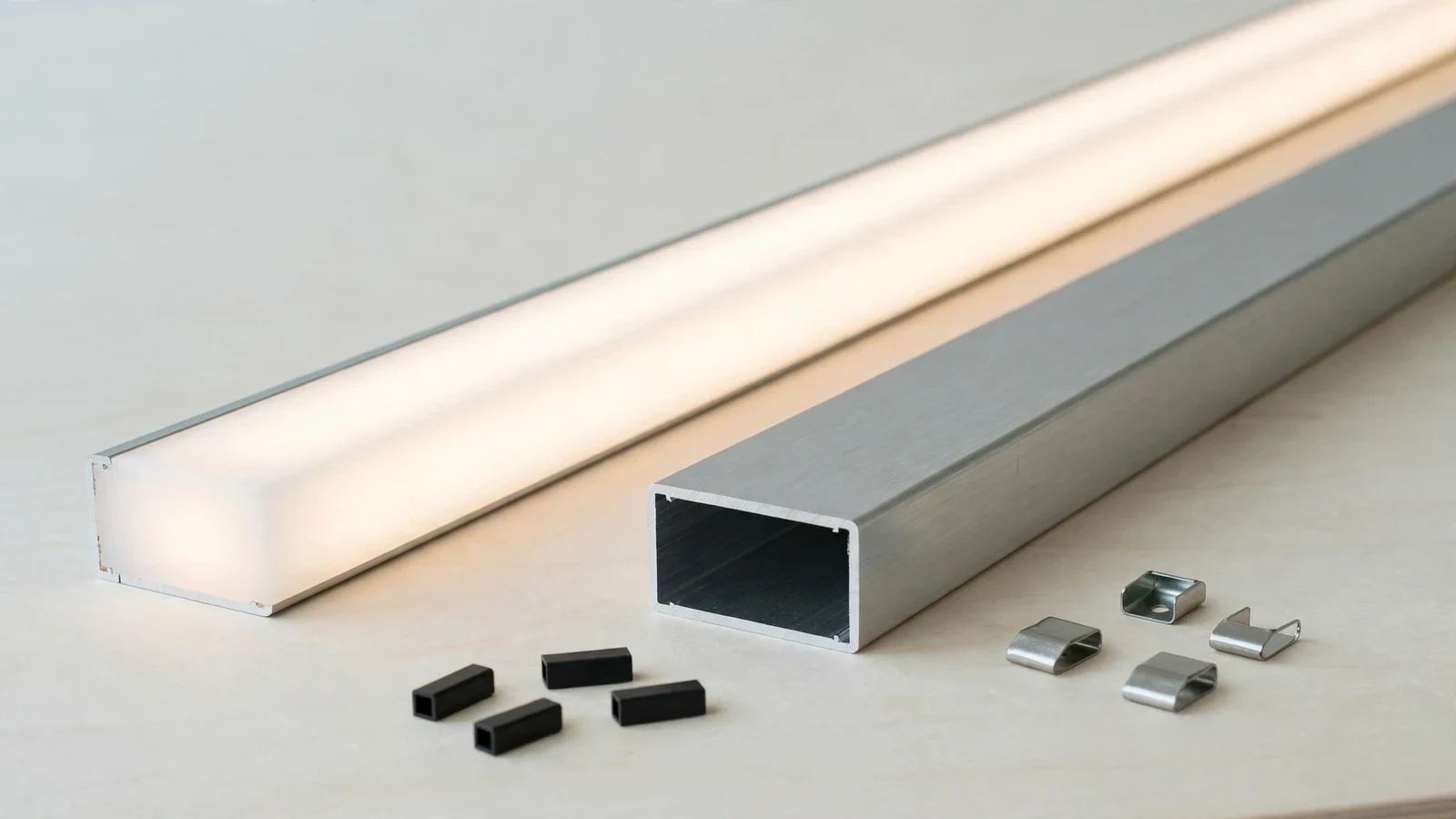
The LED profile sample process is a buyer test of production-identical samples, sealed as a golden sample for bulk acceptance. Samples show what the bulk order will look like before you commit real money to it. A sample lets you check the profile, the finish, and the diffuser in real use, not just on paper. It also tests how the strip, the end caps, and the connectors fit together as one system.
Why Samples Matter Before Bulk Orders
A bulk order locks in hundreds or thousands of pieces at once, so one small defect repeats across the whole batch. A sample finds that defect while the cost is still low and the order can still change. It also proves the supplier can make the exact model you asked for, in the exact finish. Photos and drawings cannot show finish, fit, or light quality, but a physical sample can.
Samples also protect both sides of the deal, because the buyer gets proof of quality before payment. The supplier gets a signed standard to build against, which removes guesswork from the bulk run. When a dispute comes up later, the sealed sample settles it, so keep one untouched and treat it as the contract standard.
What a Sample Should Prove
A good sample check covers six areas in one pass, and each area answers one question about the bulk order. Use the table below as your test plan and tick each row only when the sample passes it.
| Check | What to look for | Why it matters |
|---|---|---|
| Profile and size | Section, length, and wall thickness match the drawing | Wrong size blocks the install |
| Surface finish | Even colour, no scratches or dents | Finish flaws show on every piece |
| Diffuser fit | Diffuser snaps in and sits flush | Loose diffusers leak light |
| End caps and accessories | Caps fit tight, screws and clips included | Missing parts delay the job |
| Colour consistency | Two samples side by side look the same | Colour drift ruins long runs |
| Light output | Strip sits flat, no dark spots at joints | Uneven light fails the client |
Run the checks in the same order every time, because a fixed order keeps nothing from being skipped. Record each result with a photo and a short note, so you have proof if the bulk batch differs later.
How to Request a Sample
Start from the custom LED aluminum profiles range and pick the exact model first, before you ask for anything. Ask for a sample of that exact model and state the length, finish, diffuser type, and accessories in writing. This avoids a sample that differs from the bulk run and tests the wrong thing.
A standard sample from NIUYUAN is free, with freight collect, and standard samples take about 7 days to arrive. Custom samples need separate confirmation in the quotation, so do not assume the same terms apply.
Write the sample request as a short list that includes model, length, finish, diffuser, and end caps. Add the voltage, power per metre, colour temperature, and IP target, so the factory quotes the right item. Also state whether the sample must come from the mass production line, because clear requests prevent wrong samples.
The Burn-In Test: A Buyer Self-Check
A burn-in test runs the sample under power for a set time and finds early failures before the bulk order ships. Some buyers run samples for 48–72 hours without a break, to catch weak solder joints and heat issues early. This is a buyer self-check only, not a NIUYUAN factory promise, and NIUYUAN does not publish a burn-in standard. Use the test as your own screen, not as a claim about how the factory tests its profiles.
Watch the sample during the test and note any change, such as flicker, dimming, colour shift, or hot spots. Feel the profile for heat build-up at the ends, because heat is often the first sign of a weak joint. A sample that fails here would fail in bulk too, so reject it and ask for a new sample before you approve.
Sample Inspection Checklist
Use this checklist on every sample you receive and check each item, marking it pass or fail. Do not approve a sample with an open fail, but fix the issue first and then test the sample again.
- Model, length, and finish match the order
- Profile section matches the drawing
- Diffuser fits flush with no gaps
- End caps fit tight and stay in place
- Colour matches across two samples
- Strip sits flat with no dark spots
- No scratches, dents, or burrs
- Accessories in the box match the list
From Sample to Bulk: The Handover Steps
Approval is not the end of the sample process, because the sample must now guide the bulk order. Follow these steps to hand the sample over cleanly, since each step links the approved sample to the bulk batch. Skip a step and the link breaks, so treat the handover as part of the approval itself.
- Seal the golden sample and label it with the model, the date, and the order number.
- Store it where both sides can reach it for checks during the bulk run.
- Write the bulk acceptance rules against the sealed sample, not against the catalogue photos.
- Confirm the bulk run uses the same model and accessories as the approved sample.
- Check the first bulk pieces against the golden sample as soon as they arrive.
- Record the check with photos and keep them in the order file for reference.
Questions to Ask Before You Approve
A few questions now can save a costly dispute later, so ask them in writing and keep the answers with the order. Start with the sample terms and the bulk terms, then ask how the bulk batch will be checked. Clear answers turn a sample into a real standard that both sides can rely on.
Ask whether the sample is a standard item or a custom tooling piece, and who pays the sample fee and the freight. Ask who keeps the golden sample and where it is stored, so it stays safe until the bulk order lands. Ask what happens if the bulk batch differs from the sample, because the answer sets the fix before it is needed.
For the full set of questions, use the bulk inquiry checklist before you place the order. It covers the order details that a sample alone cannot settle, so pair it with this sample process for full cover.
Samples do not change the tooling, MOQ, or lead time rules, because those terms still apply to the bulk order. Read the guide to tooling, MOQ and lead times for the full terms, including the 1,000-piece MOQ and the 20–30 day lead time. Use it to plan the order around the sample result, so the timing works for your project.
For OEM orders, the sample sits inside a longer process that starts with the drawing and ends with mass production. The drawing-to-delivery OEM process shows each stage in order, so you can see where the sample check fits. This keeps the sample step in the right place and stops it from being skipped under time pressure.
Common Sample Mistakes
Most sample problems come from the same few mistakes, and the first is testing a sample that differs from the bulk model. A different finish or diffuser makes the test useless, because it proves nothing about the real order. The second is skipping the side-by-side colour check, since colour drift only shows when two pieces sit together.
The third mistake is losing the golden sample, because without it there is no standard to judge the bulk batch. Store it in a labelled box and keep it untouched, so it stays valid until the bulk order is checked. The fourth is treating the sample MOQ like the bulk MOQ, but the NIUYUAN bulk MOQ of 1,000 pieces covers bulk orders only.
Frequently asked questions
How long does a standard LED profile sample take?
A standard sample takes about 7 days to arrive, and the sample itself is free with freight collect. This timing covers standard models already in the range, while custom samples need separate confirmation in the quotation.
Should the sample match the bulk order exactly?
Yes, the sample must match the bulk order in model, finish, diffuser, and accessories, or the test proves nothing. Always state the exact model and finish in the sample request, so the factory sends the right item.
What is a golden sample?
A golden sample is one untouched sample kept as the bulk acceptance standard for the whole order. Both sides agree it shows the correct model, finish, and colour, and bulk pieces are checked against it on arrival.
How do I check colour consistency on samples?
Place two samples of the same model side by side under the same light and compare the finish and the lit colour. Any visible drift means the bulk run needs a tighter check before you approve the order.
What happens if the bulk batch differs from the sample?
Compare the bulk pieces against the sealed golden sample first and record the difference with photos and a short note. Then raise it with the supplier and ask for a fix, because the golden sample gives both sides a clear standard to judge.

Share this guide
Tell us what you need
Send Your Project Requirements
Share your contact details and tell us which LED profiles you need.
Explore custom profile options