
Buying LED Aluminum Profiles in Bulk: A Quality and Packaging Checklist
A practical purchasing guide for distributors, wholesalers and lighting brands: specify the complete order, verify component fit and protect long profiles for shipment.
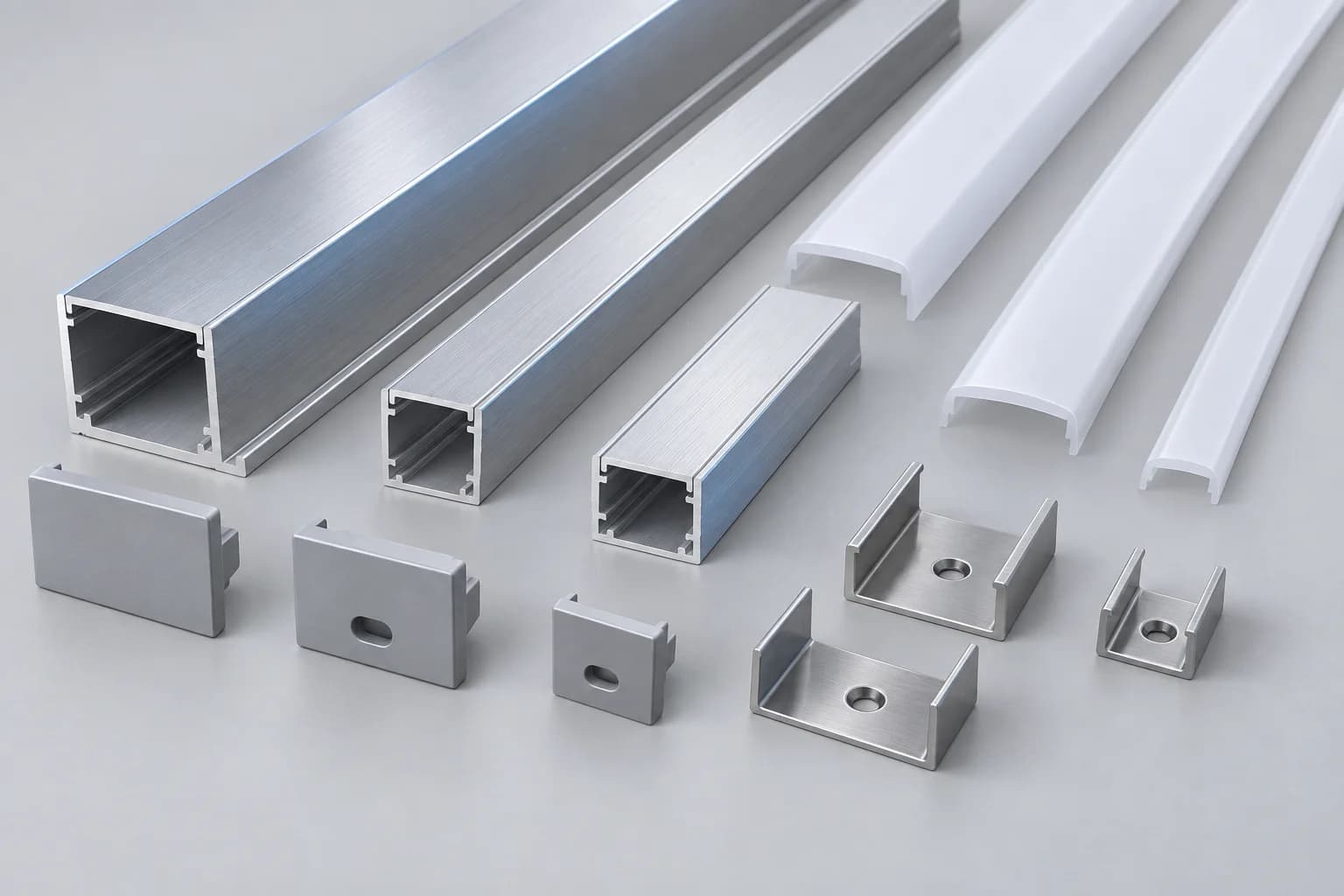
What Should You Check Before Buying LED Profiles in Bulk?
Define the complete supply scope, approve the required dimensions and component fit, specify finish acceptance, agree on inspection records and confirm protective packaging.
Use a model reference or controlled drawing, a component list and a clear quantity schedule. Confirm commercial terms for the particular order.
A bulk purchase should describe what will arrive, how it will be checked and what happens if the supplied goods differ from the agreed requirements.
On This Page
Introduction
A bulk LED aluminum profile order is more than a purchase of metal sections. The buyer may also need matching diffusers, end caps, mounting clips, cut lengths, finish consistency and packaging that protects long components through transport and warehouse handling.
A low unit price provides limited value if covers do not fit, accessories are missing or visible surfaces arrive scratched. These problems are easier to address when requirements are clear before production.
For distributors, wholesalers and lighting brands, the objective is to receive identifiable, usable components that match an approved specification. For project buyers, the order also needs to support the installation schedule and site conditions.
This guide provides a practical framework for supplier discussions, sample approval, shipment inspection and receiving checks. It is a proposed procurement workflow, not a claim that every order includes the same inspection services or packaging.
1. Define Exactly What You Are Buying
The phrase “LED aluminum profile” can refer to a bare extrusion or a component bundle.
Before comparing quotations, distinguish:
- Aluminum section only.
- Section with a matching diffuser.
- Section with diffuser and end caps.
- Installation kit with mounting components.
- Custom or processed parts made to an approved drawing.
List each item and its quantity. A quotation that includes only the extrusion should not be compared directly with one that includes covers, accessories and finished packaging.
Clarify the Lighting-System Boundary
Do not assume that strips, drivers or controllers are included because a product photograph shows an illuminated assembly. NIUYUAN’s custom-profile guidance states that these electrical components are not included by default. Confirm the proposed supply scope in the quotation.
This distinction also affects testing. Dimensional inspection of a bare channel is different from evaluating a powered lighting assembly.
Identify Who Approves Each Requirement
The buyer, lighting designer, installer and supplier may hold different information. Assign responsibility for section fit, visual appearance, electrical compatibility and packaging requirements. Clear approval ownership helps prevent unresolved questions from being passed into production.
2. Specify Quantities and Lengths with Clear Units
State whether the order quantity is measured in pieces, meters, complete kits or another agreed unit. Identify the length associated with each piece and whether accessories are packed per kit or separately.
For illustration, 500 pieces at two meters each represent 1,000 meters of extrusion. That arithmetic does not define the number of covers, end caps or clips unless those quantities are specified separately.
Separate Stock Lengths from Cut-to-Length Requirements
A cross-section dimension is not a supply length. For cut parts, include the required length, agreed tolerance, end condition and any machining. Show whether holes or cable exits are measured from a cut end or another reference.
If the customer will cut profiles locally, confirm the supplied length and suitable packing arrangement for that logistics route.
Account for the Installation Layout
Accessory quantities should follow the actual run arrangement. A total meter quantity alone cannot establish how many end caps are needed. Separate runs, joints and mounting methods can change the component requirement.
Use a schedule that links each run or kit type to its parts.
3. Check Dimensions That Control Function
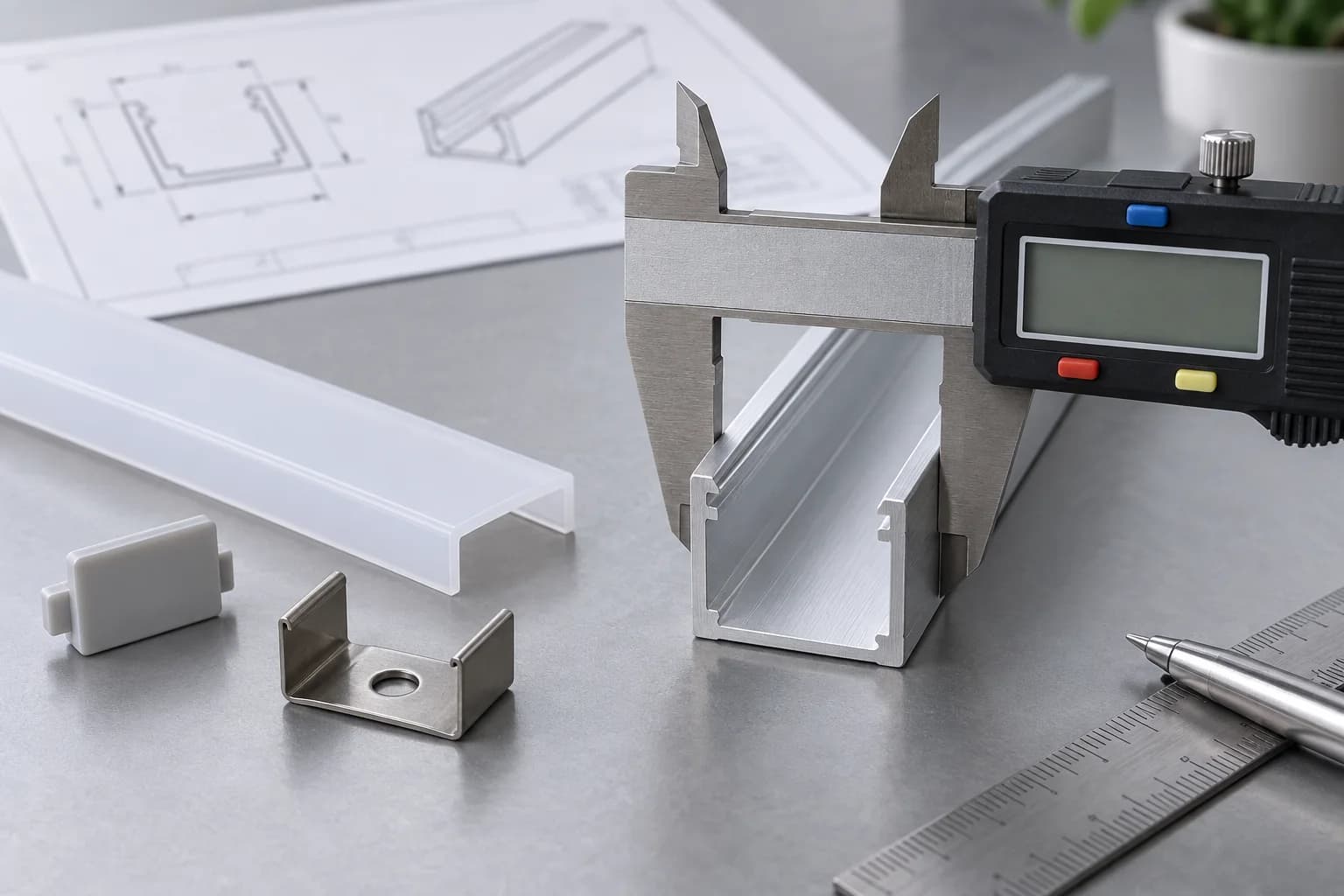
Start with the interfaces that determine whether the product works in the intended assembly. These may include internal strip space, diffuser engagement, mounting features, flange dimensions, end-cap fit and connector clearance.
Specify the dimensions critical to fit instead of applying one arbitrary tolerance to every feature.
Use a Controlled Drawing
The drawing should identify the model, revision, units and relevant datums or reference surfaces. For custom sections, distinguish requirements that must remain fixed from dimensions open to feasibility discussion. Confirm the final drawing before authorizing tooling or production.
For a standard model, ask which drawing or specification defines the supplied product.
Match the Measurement Method to the Feature
Some dimensions can be checked with suitable calipers. Others may require gauges, fixtures or another agreed method. A measurement without a defined reference can produce disagreement even when both parties use accurate instruments. State where and how critical dimensions will be assessed.
Include Length, Straightness and Cut Ends Where Relevant
For long visible installations, overall alignment and end condition can matter as much as the cross-section. Agree on requirements appropriate to the product and application. Avoid inventing universal straightness or cutting tolerances that the supplier has not accepted.
Inspection should also identify burrs or damage that interfere with assembly and handling.
4. Confirm Material and Finish for the Selected Model
If the application requires a particular alloy or temper, state it explicitly and request appropriate confirmation.
6063 is widely used for extruded profiles, but alloy and temper are separate specifications. Hydro explains that temper affects the processed material’s condition and properties. Read Hydro’s extrusion-alloy guidance.
A catalog description of “Aluminum” should not automatically become “6063-T5” in the purchase order.
Define the Finish Reference
Specify the surface treatment, color reference and visible surfaces. A color code can support the discussion, but a physical reference may also be needed where appearance is critical. Include gloss or texture expectations where relevant.
For multiple visible components, compare them together. The customer may notice a difference between adjacent sections even when each looks acceptable in isolation.
Agree on Visual Inspection Conditions
Define how appearance will be evaluated: lighting, viewing position, relevant surfaces and comparison sample. Document what constitutes an unacceptable scratch, mark or other defect for the order. The required level should reflect the application, especially for exposed retail products.
“Good quality finish” is too general to resolve a disagreement after shipment.
5. Test the Complete Component Fit
Diffusers and accessories should be identified by their matching references. Similar width or appearance does not prove compatibility. Check the selected cover, end cap and mounting component with the actual profile sample.
Evaluate Assembly and Removal
Assess whether the cover engages as intended, whether end caps seat correctly and whether the mounting parts support the proposed installation. Where maintenance matters, check removal and refitting. Record any assembly sequence or access requirement the installer needs to know.
Check the Intended Length Configuration
A short sample can establish basic fit, but it may not answer questions about long covers, joints or cut parts. Request a representative assembly where the order depends on those details. Confirm the relation between profile length, cover length and end-cap arrangement.
Separate Mechanical and Optical Approval
A cover can fit correctly while producing an unacceptable lighting appearance. If optical performance is part of the purchase requirement, identify the strip and evaluation conditions. Do not treat an unlit fit check as approval for a dotless result.
6. Approve Samples with a Clear Scope
A sample can represent section geometry, finish, component fit, packaging or a complete combination. State what is being approved and what remains unresolved.
Keep the sample identification, drawing revision and approval record together. If changes are requested, document whether a new sample is required.
Distinguish Development Samples from Production References
A prototype may contain features or processes that differ from the intended bulk product. Ask the supplier to identify those differences. Approval should relate to a reproducible production specification rather than an attractive one-off sample.
Retain a Reference
Where practical, buyer and supplier should retain identifiable references. For repeat orders, record changes to components, finishes or drawings. An earlier approval should not silently cover a modified product.
Illustrative Distributor Scenario
Consider a distributor developing a shelf-lighting kit. The aluminum section is supplied in one packing unit, while diffusers and mounting clips come in separate packages. The sample fits correctly, but the distributor still needs to confirm which parts belong to each saleable kit.
The approval record should therefore identify the component references, quantities per kit, finish and packing arrangement. If a cable-entry end cap replaces a closed end cap, update that record before ordering. This is an illustrative planning example, not a reported NIUYUAN customer project.
7. Agree on the Inspection Plan Before Production
An inspection plan should connect each requirement to a method and a record. The following table is a suggested structure:
| Checkpoint | What to establish | Useful record |
|---|---|---|
| Product identity | Correct model, revision and finish | Item list and identification photographs |
| Critical dimensions | Agreement with the approved specification | Measurements linked to drawing features |
| Component fit | Correct matched cover and accessories | Assembly check record |
| Appearance | Agreement with the finish reference | Inspection observations and photographs |
| Quantities | Correct parts and packing units | Count reconciliation |
| Packaging | Protection and identification as agreed | Packing record and package photographs |
Define Sampling and Acceptance
Agree on the lot definition, sampling approach, defects to be assessed and action when requirements are not met. A small number of samples cannot prove that every piece is defect-free. If a formal sampling standard is required, specify the applicable method and accepted parameters.
Do not use an unexplained “AQL passed” statement as a substitute for an agreed inspection plan.
Make Factory Testing Requirements Explicit
If the buyer requires powered, optical or thermal evaluation, include it in the order scope. State the components, test conditions, measurement method and acceptance criteria. Do not assume that a routine extrusion inspection includes those tests.
The resulting report should identify the tested assembly and avoid claims beyond its scope.

8. Specify Packaging for Long Profiles and Diffusers
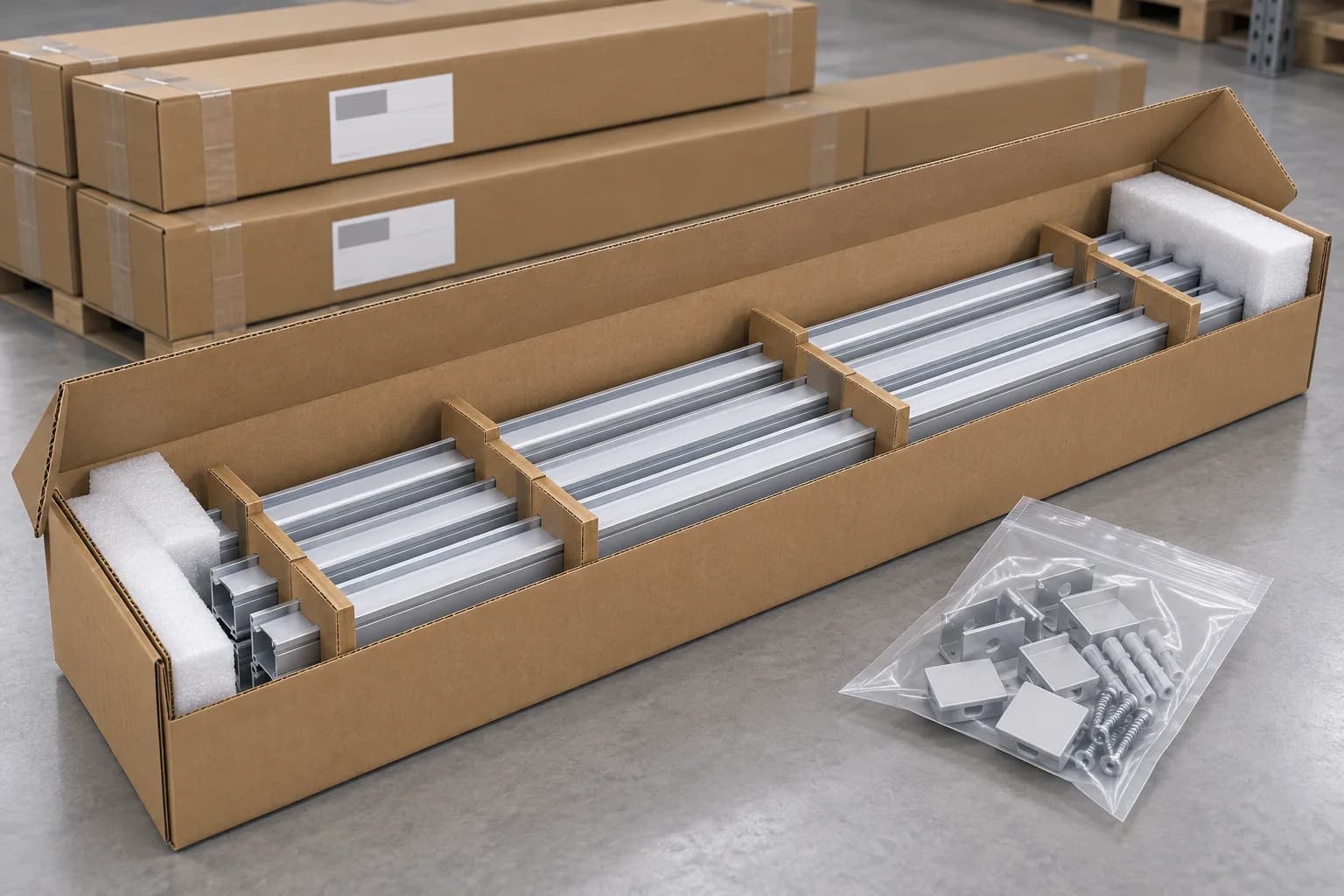
Packaging should address the actual product, lengths, finishes and transport route. Long sections need protection from bending, end impacts and movement. Diffusers may need separate protection from abrasion or deformation. Small accessories need containment and identification.
UPS cautions that loose-fill material is unsuitable for some flat or narrow items that can move within a box. Its guidance reinforces choosing packaging around the product rather than relying on generic filler. Read UPS packaging guidance.
Protect the Visible Surfaces
Agree on separation between parts and any protective wrapping. Check whether protective film or labels can be removed without damaging the intended appearance. Avoid assuming that one film or adhesive is appropriate for every finish.
Support the Length and Ends
Discuss the outer package, internal support and end protection. For larger freight loads, review how bundles are secured and handled. FedEx’s freight guidance addresses load protection, bracing and movement control; the suitable arrangement still needs to be determined for the actual shipment. Read FedEx freight-packing guidance.
Identify the Contents
Specify the product reference, finish, quantity, order reference and component identification needed on each package. Private-label requirements should be reviewed with approved artwork. Labels should help the receiving team distinguish similar sections and accessory sets.
9. Review Shipment Inspection and Dispatch Records
Shipment inspection should compare the prepared goods against the approved order. Review product identity, sampled results, quantity reconciliation and packing scope before release under the agreed process.
Photographs can support the record, but a photograph of sealed cartons does not show that dimensions or accessory quantities were checked.
Make Exceptions Visible
If inspection identifies a deviation, record the affected items and proposed resolution. Keep any buyer-approved concession separate from a statement that the goods met the original specification. This creates a clearer reference for receiving and repeat orders.
Confirm Dispatch Information
Request the documents and package information relevant to the agreed transport arrangement. Distinguish production completion, dispatch and expected arrival. These are different milestones, and the schedule should identify which one the supplier is confirming.
10. Compare the Complete Purchase Cost
Compare quotations using the same product and supply assumptions. Include the extrusion, covers, accessories, processing, packaging, development items where applicable and transport scope. Confirm which costs are included or excluded.
A lower price per meter may reflect a different component bundle or finish specification.
For distributors, also consider the operational work required after receipt: sorting, cutting, repacking or replacing missing parts. These activities should be identified when evaluating the proposal, without inventing a financial saving.
Keep Quote Revisions Comparable
When a supplier revises a proposal, check whether the drawing, finish, cover or packing unit has also changed. Record those differences alongside the price. A revised quotation should make substitutions visible rather than leaving the buyer to infer them from a new total.
11. Use a Concise RFQ and Order Checklist
A practical bulk-order inquiry should contain:
- Product model or controlled drawing.
- Quantity and unit for each item.
- Required lengths and processing.
- Material requirements where applicable.
- Finish and appearance reference.
- Matching diffuser and accessory list.
- Sample-approval requirements.
- Inspection methods and requested records.
- Packaging and label requirements.
- Destination and requested schedule.
Separate mandatory requirements from preferences. This allows the supplier to identify feasibility questions and quote a defined scope.
For an early-stage project, state which details remain open instead of filling the gaps with assumed values. The custom LED profile inquiry checklist provides additional preparation guidance for drawing-based requirements.
12. Plan Receiving Checks and Repeat-Order Control
Prepare the warehouse or project team before the goods arrive. Inspect package condition, reconcile labels and quantities, and sample the critical features identified in the order. Record discrepancies with photographs, item references and affected quantities.
Preserve Traceability
Keep receiving records linked to the purchase order and shipment. If goods are distributed onward, maintain the identification needed to trace affected stock. This is especially useful when visually similar profiles have different covers or mounting parts.
Use Findings to Improve the Next Order
A receiving issue should lead to a specific correction: clearer labels, revised protection, a better-defined dimension or an updated component schedule.
For repeat orders, confirm the approved revision and any changes. “Same as last time” is insufficient when the product record is incomplete.
Retain a short receiving checklist with the approved specification so another colleague can repeat the checks consistently. This also helps distinguish a transport issue from a product or component-identification issue when questions arise later.
Frequently Asked Questions
What Is the Most Important Bulk-Purchase Check?
Confirm the complete specification and supply scope. A correct extrusion alone may not create a usable installation kit. Dimensions, covers, accessories, finish and packaging should be identified together.
Should I Ask for Samples Before a Bulk Order?
Samples are useful when fit, appearance or a new design needs approval. Define what the sample represents and record any differences from the intended production product.
Are End Caps and Mounting Clips Always Included?
No. Inclusion depends on the quotation. List the required component references and quantities explicitly rather than assuming that every profile is sold as a complete kit.
Does an Inspection Report Guarantee Every Piece?
No. The report reflects its stated scope and sampling method. It should identify what was inspected, how it was checked and which acceptance criteria were used.
Can All Profiles Use the Same Packaging?
Packaging should reflect length, finish, component fragility and transport method. A package suitable for short samples may not be suitable for bulk long sections.
What If the Catalog Does Not State MOQ or Lead Time?
For NIUYUAN, MOQ: 1,000 pcs per model and per finish. Custom sections have the same MOQ: 1,000 pcs. Lead time: 20-30 days for all orders, counted from the date the prepayment is received. Tooling development takes about 7 days. Tooling time is not included in the 20-30 day lead time for custom orders. Confirm the model, finish, components and destination in your quotation. See our ordering FAQ for the current company policies.
Can I Request Private-Label Packaging?
Include the artwork, label information, packing units and destination in the inquiry. Availability, approval requirements and costs should be confirmed for the proposed order.
Conclusion
A reliable bulk LED profile purchase starts with a clear specification and ends with traceable receiving records.
Define the component set, approve the important interfaces, agree on inspection and protect the goods for their transport route. This gives supplier and buyer a practical basis for managing quality and resolving exceptions.
Sources

Share this guide
Tell us what you need
Send Your Bulk LED Profile Requirements
Share your contact details and tell us which LED profiles you need.
Explore custom profile options