
LED Color Temperatures Explained
Learn how LED color temperature works, what warm, neutral, and cool white mean, and how to pick the right Kelvin for each room.
On This Page
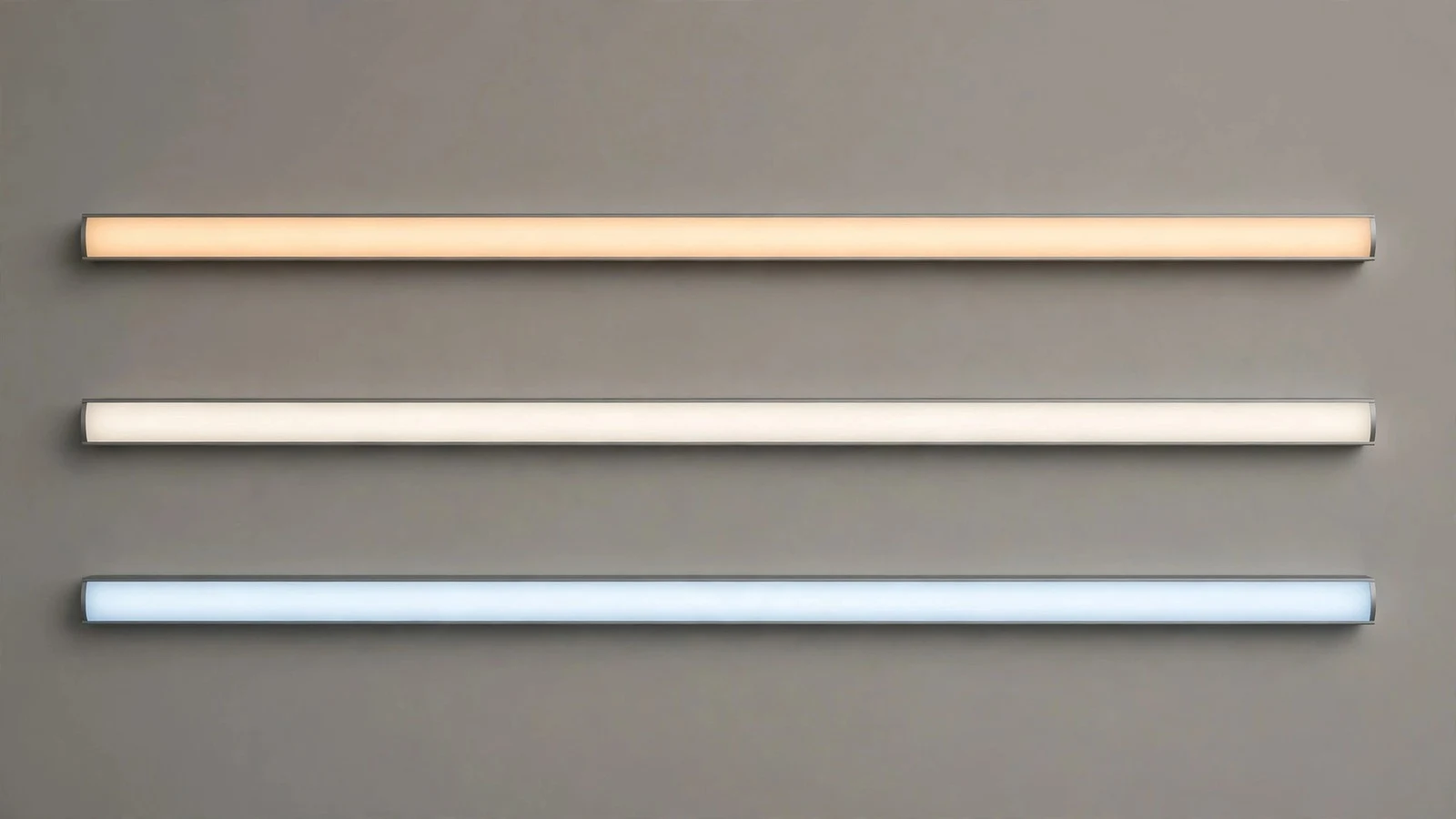
Color temperature describes whether LED light looks warm or cool, and it is measured in Kelvin, written as K. Low values near 2700K look warm and yellowish, like the glow of a sunset lamp. High values near 6500K look cool and bluish, like midday daylight coming through a large window.
For most projects the choice comes down to three bands, and each band fits a different kind of room. Warm white suits bedrooms and restaurants, neutral white suits kitchens and offices, and cool white suits warehouses. Pick the band for the room first, then check brightness and color rendering as separate decisions.
This guide covers the full color temperature spectrum and shows how to choose the right band for each space. It explains the three common bands, the trade offs behind each one, and the mistakes buyers make most often.
The key point is simple: color temperature, brightness, and color rendering are three separate traits. A warm light can be bright or dim, and a cool light can render colors well or poorly.
What Is LED Color Temperature?
Kelvin is a scale for the color appearance of light, and it does not measure heat from the lamp or power use. It describes only the hue that the eye sees. A low value means a warm amber tone, and a high value means a cool blue white tone. The number tells you about look only, and it says nothing about how much light a strip gives out.
LED makers group their products into bands along this scale. The bands below are commonly used industry groupings, not a NIUYUAN product specification. They give buyers a shared language for quotes and samples. When you ask a supplier for 3000K, both sides mean the same warm white. Ask for a sample before a bulk order, because a sample shows what the number looks like in your own profile.
LED Color Temperature Chart: Warm, Neutral, and Cool White
The table below groups the spectrum into three bands. Use it as a starting point rather than a strict rule. Room use, wall color, and daylight all shift the final feel. Test the band in the real room when the choice is close.
| CCT band | Feel | Typical spaces |
|---|---|---|
| 2700–3000K warm white | Warm, relaxed, amber | Bedrooms, living rooms, restaurants, hotels |
| 3500–4100K neutral white | Clean, balanced, natural | Kitchens, bathrooms, offices, retail aisles |
| 5000–6500K cool white / daylight | Bright, crisp, bluish white | Warehouses, workshops, inspection areas, sports halls |
One room should use one color temperature, because mixing warm and cool light in the same space looks uneven at once. The eye notices the clash at once, so if two zones meet, keep the same band across both of them. A hallway can bridge two rooms, but it should match one of them, since consistency matters more than the exact number.
Daylight also changes how a band feels through the day. A neutral white strip can look cool in the morning and warmer under evening lamps. That shift is normal, so judge the band under the lighting the room will use most often rather than at a single hour.
Some projects break the one band rule on purpose, with a warm lobby leading into a neutral white work floor. That contrast can work when each zone has its own purpose and a clear boundary between them. Inside a single open room, though, the rule holds, because the eye reads the whole space at once.
Color Temperature vs Brightness vs CRI
Buyers often mix up three traits of LED light. Each trait has its own unit and its own test. Color temperature sets the hue. Brightness sets how much light reaches a surface, and color rendering sets how true colors look under that light. Changing one does not change the others. A brief that states only Kelvin leaves two choices open.
Brightness is measured in lumens, and more lumens means more light rather than a warmer or cooler tone. A 2700K strip and a 6000K strip can give the same lumen output. Check the lumen figure per meter when you compare two strips. Do not judge brightness from the Kelvin number, because the two numbers describe different things.
Color rendering is measured by CRI, and the scale runs to 100. A higher value means colors look closer to how they look in daylight. General lighting commonly uses CRI 80, while spaces where color matters often use CRI 90 or above.
Retail displays, kitchens, and art are common examples. CRI says nothing about warm or cool. A warm strip can have a high CRI, and a cool strip can have a low one, so check the two numbers apart.
Think of the three traits as three dials. Set color temperature for mood, set lumens for light level, and set CRI for color truth before you send the brief. A good brief states all three numbers, which keeps the quote, the sample, and the order aligned.
A simple test helps when the brief is unclear. Ask the supplier for the same strip in two bands and compare them side by side. The side by side view shows the mood difference at once. See color inconsistency across production runs.
How to Choose LED Color Temperature by Space
Use this checklist before you fix the Kelvin value for a room, and walk the space first.
- Match the mood: warm white for rest and dining, neutral white for work and cooking, and cool white for tasks that need alertness.
- Match the daylight: rooms with strong daylight can take a cooler band. Rooms with little daylight often feel better one band warmer.
- Keep one CCT per room, including cove, under cabinet, and ceiling light, so the whole room reads as one space.
- Check wall and floor color. Dark wood and warm paint suit warm white, while white walls and grey floors suit neutral or cool white.
- Test with a sample in the actual profile and diffuser, under the real ceiling height.
- Confirm the same CCT across every run of the order, so a later batch does not look different from the first.
Homes usually sit at the warm end, with living rooms and bedrooms feeling calm near 2700–3000K. Kitchens and bathrooms often move to neutral white, near 3500–4100K, where food and faces need clear sight. Offices follow the same logic: work areas take neutral white, while meeting rooms can sit a little warmer. Retail and warehouse uses are different again. Shops use neutral white to keep products true, and storage areas use cool white for visibility.
Shops and work areas show why the band matters, because a clothing shop in warm white can make white shirts look cream. The same shop in neutral white keeps colors closer to true. A warehouse in warm white can feel dim even with enough lumens. The same space in cool white feels alert and easy to work in. Match the band to the task, not to habit.
What to Ask Your Supplier Before You Order
A short set of questions prevents most color temperature problems, so ask them before you pay.
- Which CCT bands do you supply, and can you ship a sample in the exact band I plan to order?
- How do you keep color consistent across production runs, and what happens if a later batch looks different?
- Which CRI grade comes with this strip? Is a higher CRI grade available?
- Can I see the sample inside the same aluminum profile and diffuser I will use, so I can judge the real look?
- What is the minimum order quantity, the lead time, and the sample policy for this order?
At NIUYUAN, the minimum order quantity is 1000 pieces, and lead time runs 20–30 days from prepayment. New tooling takes about 7 days, standard samples take about 7 days, and samples are free with freight collect. Ask for the sample in your chosen CCT and diffuser. A sample check costs a few days and saves a full order of the wrong light. See 24V COB max run length.
A diffuser can shift how the light feels in the room, so treat the sample check as the proof rather than the data sheet. If the sample looks right, order with confidence. If it looks wrong, change the band first.
If batches look different after delivery, the cause is often batch drift, not a wrong Kelvin choice. Our guide to color inconsistency across production runs explains how to check it and what to ask next. For a non standard size or shape, see our custom LED aluminum profiles for made to order options.
NIUYUAN is a LED aluminum profile manufacturer founded in 2012, with 6 in-house extrusion lines and OEM/ODM service. More buying guides are in our LED profile guides.
How This Guide Relates to Our Other Guides
This guide covers the full color temperature spectrum and how to choose by space. A companion guide covers only the 5000K versus 6000K choice, for buyers who have already settled on cool white. A separate guide covers CRI, which is color rendering rather than color temperature. Our guide to color inconsistency across production runs covers batch to batch color drift. Each guide answers one question, so start with the question you actually need to solve.
Frequently asked questions
What is the best LED color temperature for a living room?
Warm white, commonly 2700–3000K, suits most living rooms. It feels relaxed in the evening and flatters wood, fabric, and warm paint in the room. Keep the same band across ceiling, cove, and lamp light in the room, so the whole space reads as one.
Is 4000K warm or cool?
4000K is neutral white, and it sits between warm white and cool white near the middle of the common bands. It suits kitchens, bathrooms, and offices, where clear sight matters more than a cozy feel.
Does color temperature affect brightness?
No. Color temperature sets the hue of the light, while brightness is measured in lumens. A 2700K strip and a 6000K strip can give the same lumen output, so check lumens per meter when you compare brightness.
What CRI should I choose with my color temperature?
CRI is independent of color temperature, so choose it on its own for the use of the room. General lighting commonly uses CRI 80, while spaces where color matters often use CRI 90 or above. Retail displays, kitchens, and art are common examples, so state both Kelvin and CRI in your brief.
Should I use the same color temperature in every room?
No. Each room can take the band that fits its use, but keep one CCT inside each room. A bedroom can be warm white while the kitchen next door is neutral white, and the change feels natural. Match the band where two rooms meet, so the change from one room to the next does not feel abrupt.

Share this guide
Tell us what you need
Send Your Project Requirements
Share your contact details and tell us which LED profiles you need.
Explore custom profile options