
The Complete LED Profile Kit Checklist: Channel, Diffuser, End Caps, Clips and Connectors Buyers Forget
Order a complete LED profile kit without missing parts, covering channel, diffuser, end caps, clips, suspension, connectors and the compatibility checks that prevent site delays.
On This Page
Why a channel alone is not an order
Most LED profile delays on site are not caused by the channel. They are caused by the small parts that were never ordered: the end cap that closes a run, the clip that fixes it, the connector that joins two lengths, or the diffuser length that does not match the channel length. The channel arrives, work starts, and then stops while the missing parts are ordered separately — often in a smaller quantity than the original order, with its own lead time.
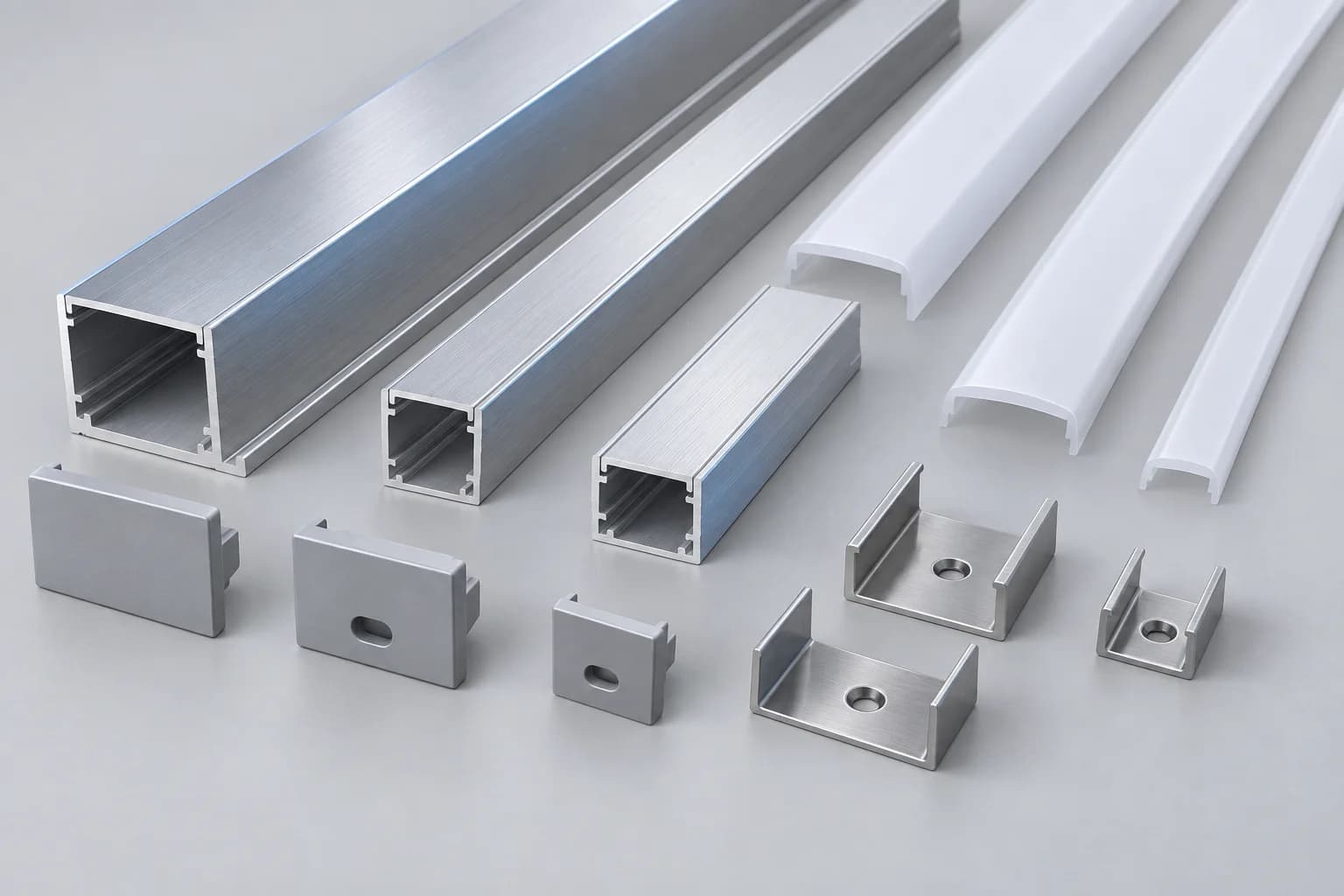
A complete-kit order treats the profile as a system: channel, diffuser, end caps, fixing parts, suspension parts where needed, connectors and joints, and the strip and driver position. This guide gives a checklist for that system, and the compatibility checks that stop a kit from failing on its smallest part.
The kit, part by part
| Kit part | What it does | What to specify |
|---|---|---|
| Aluminum channel | Carries the strip, spreads heat, defines the light line | Model, mounting method, length, finish |
| Diffuser / cover | Softens the light and protects the strip | Material (PC or PMMA), opal/frosted or clear, length matching the channel |
| End caps | Close the ends of a run and protect strip and diffuser edges | Same model and finish as the channel, quantity per run end |
| Mounting clips / brackets | Fix surface-mounted or recessed channels to the substrate | Clip type, substrate, and quantity per run |
| Suspension kit (where used) | Hangs suspended profiles at the right height | Wire/rod type, suspension points, cable routing |
| Straight connectors / joints | Join channel lengths into longer runs | Joint type, alignment, and diffuser treatment at the joint |
| Corner pieces (where used) | Form corners without breaking the light line | Corner angle and diffuser treatment at the corner |
| Fixings | Screws, adhesive, or base track fixings for the substrate | Substrate type and fixing method |
| LED strip, driver, controller | The light source and its control | Only if quoted: strip width, driver location, controller type |
Two parts cause the most trouble. The first is the diffuser: it must match the channel model, sit fully in the channel without bowing, and be ordered in lengths that match the channel lengths, including joints. A diffuser ordered in standard lengths for cut-length channels will leave shortfalls at every joint. The second is the end cap: a run has two ends, and a project with ten runs needs twenty end caps, not ten. Count ends, not runs.
Compatibility checks before you order
Same model, same finish. End caps, clips, connectors and diffusers are model-specific. A clip for one channel model does not necessarily fit another, even if the two channels look similar. State the channel model on every line of the order, and confirm that each accessory line has been matched to that model.
Strip width and channel opening. The strip must fit the channel opening with clearance, and the diffuser must close over it without pressure on the strip. Send the strip width with the inquiry and confirm the fit, rather than assuming a standard strip fits every channel.
Diffuser material: PC vs. PMMA. Both diffuser materials are used on this site's range, and the choice affects optical finish, toughness and use. The site's existing diffuser guide compares them in detail; for kit purposes, the practical point is simpler: do not mix diffuser materials within one visible run unless the difference has been checked on a sample, because two materials can read differently under the same strip.
Clip and fixing suitability. A clip that suits a wood substrate may not suit concrete, tile, or metal. State the substrate for each installation location and confirm the fixing method. For suspended runs, confirm suspension points, cable entry, and how the driver is reached — suspension hardware ordered without a cable plan leaves cables visible or drivers inaccessible.
Joints and corners. For runs longer than a single length, confirm joint alignment, how the diffuser is treated at the joint, and whether the joint is visible in the finished light line. For corners, confirm the corner angle and the diffuser treatment. A joint or corner approved on paper but not on a sample is where a continuous light line most often breaks.
How a full kit differs from channel-only and bulk buying
Channel-only ordering suits a buyer who already holds matching accessories in stock and only needs more channel. It is the cheapest line on the quotation and the most expensive order on site if the accessories are not actually in stock. Use it only when the accessory stock has been physically checked.
Full-kit ordering suits a new project, a new model, or any site where the installer has not used this exact channel before. Everything arrives together, in matching model and finish, and the installer is not left improvising fixings. The quotation will be higher than channel-only, but the comparison should be against the cost of a stopped site, not against the channel price alone.
Bulk ordering is a different question again: it is about quantity, inspection and packing across many runs, which the site's bulk buying guide covers. A bulk order still needs the kit checklist — buying a thousand channels without their end caps is a larger version of the same mistake, not a different one.
Use, maintenance and spares
A complete kit is also a maintenance plan. Order spares with the main order: spare diffuser lengths, spare end caps, and spare clips. These are the parts most likely to be damaged during installation or needed after a strip replacement, and they are the parts least likely to be available quickly as a small re-order.
Record the kit with the project handover: channel model, diffuser type, strip type, driver location, and fixing method for each run. A future strip replacement or diffuser replacement then starts from a known specification, not from a site visit to identify an unmarked channel.
For cleaning, wipe diffusers with a method suitable for the diffuser material and finish, and clear dust from channel ends and joints. Avoid abrasive cleaning on diffusers and on anodised or coated finishes, and confirm the cleaning method with the supplier if the installation is in a dusty or greasy environment.
Packing and delivery
Standard lengths are 1 m, 2 m, 2.5 m and 3 m, and lengths can be customised. When ordering a kit, keep channel lengths and diffuser lengths on the same schedule: for each run, list the channel length, the diffuser length, the number of end caps, the clips and fixings, and any connectors or corner pieces. That schedule is what prevents a diffuser shortfall at a joint.
Commercial terms, as verified for this site: minimum order 1,000 pcs per model per finish (the same for custom orders); samples are free with freight collect, and standard samples take about 7 days; lead time is 20–30 days from prepayment, plus about 7 days for tooling if a new mould is required. Note how the minimum order applies: it is per model per finish, so a kit with several models or finishes needs each line checked against that minimum. Confirm packing protects diffuser faces and small accessory parts — a box of loose end caps and clips mixed with long channels is how small parts arrive damaged or go missing on site.
LED strips, drivers and controllers are not included unless the quotation says so. If they are to be part of the kit, list them as separate lines with strip width, driver location and controller type, and ask the supplier to confirm exactly what is included.
FAQ
What is the most commonly forgotten part? End caps, counted per run end rather than per run, and diffuser lengths matched to channel lengths at joints. Both are small, cheap, and capable of stopping an installation.
Can I use clips or end caps from a different model? Do not assume so. Accessories are model-specific. Confirm each accessory against the channel model on the order.
Should I order a full kit or channel only? Order a full kit for a new project, a new model, or any site where the installer has not used this channel before. Order channel only when matching accessories are physically in stock.
How does the minimum order apply to a kit? The minimum is 1,000 pcs per model per finish. A kit with several models or finishes needs each line checked against that minimum, so confirm the quantity per model and finish before ordering.
Are LED strips and drivers included in the kit? Not unless the quotation includes them. List them separately if you need them quoted.
What spares should I order with the main order? Spare diffuser lengths, spare end caps, and spare clips — the parts most likely to be damaged during installation or needed for later maintenance.
Inquiry checklist
- Channel model, mounting method, length and finish for each run
- Diffuser material and type, with lengths matched to channel lengths
- End caps: quantity counted per run end, same model and finish
- Clips/brackets and fixings, with substrate for each location
- Suspension kit, corner pieces and connectors where required
- Strip width, and whether strips, drivers and controllers are to be quoted
- Quantity per model per finish, destination, and packing requirements
Related products
3 Profiles
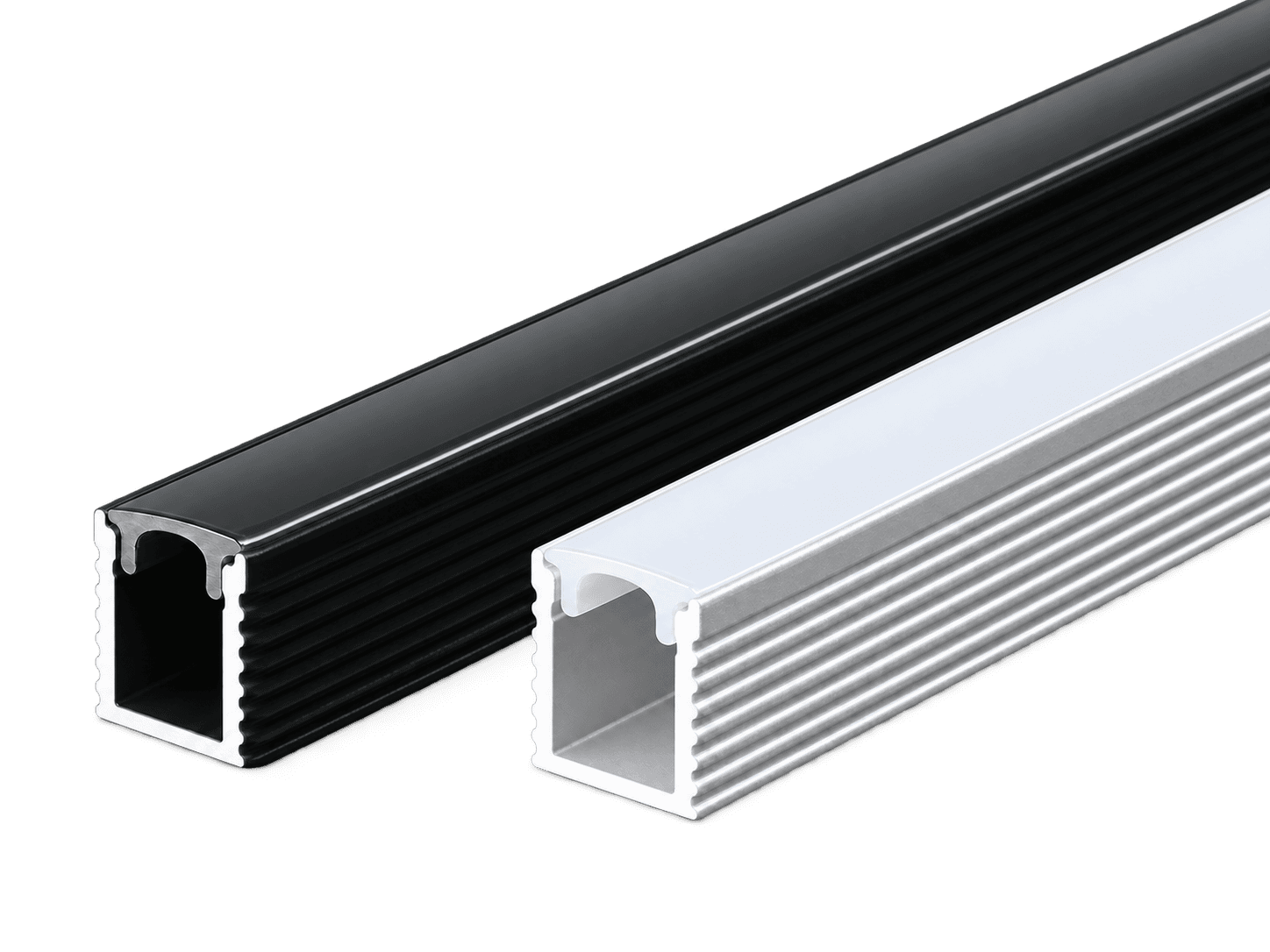
NY-XT231
A compact aluminum channel for narrow surface-mounted lighting details in furniture and displays, with model-specific cover and mounting components.
View Product Details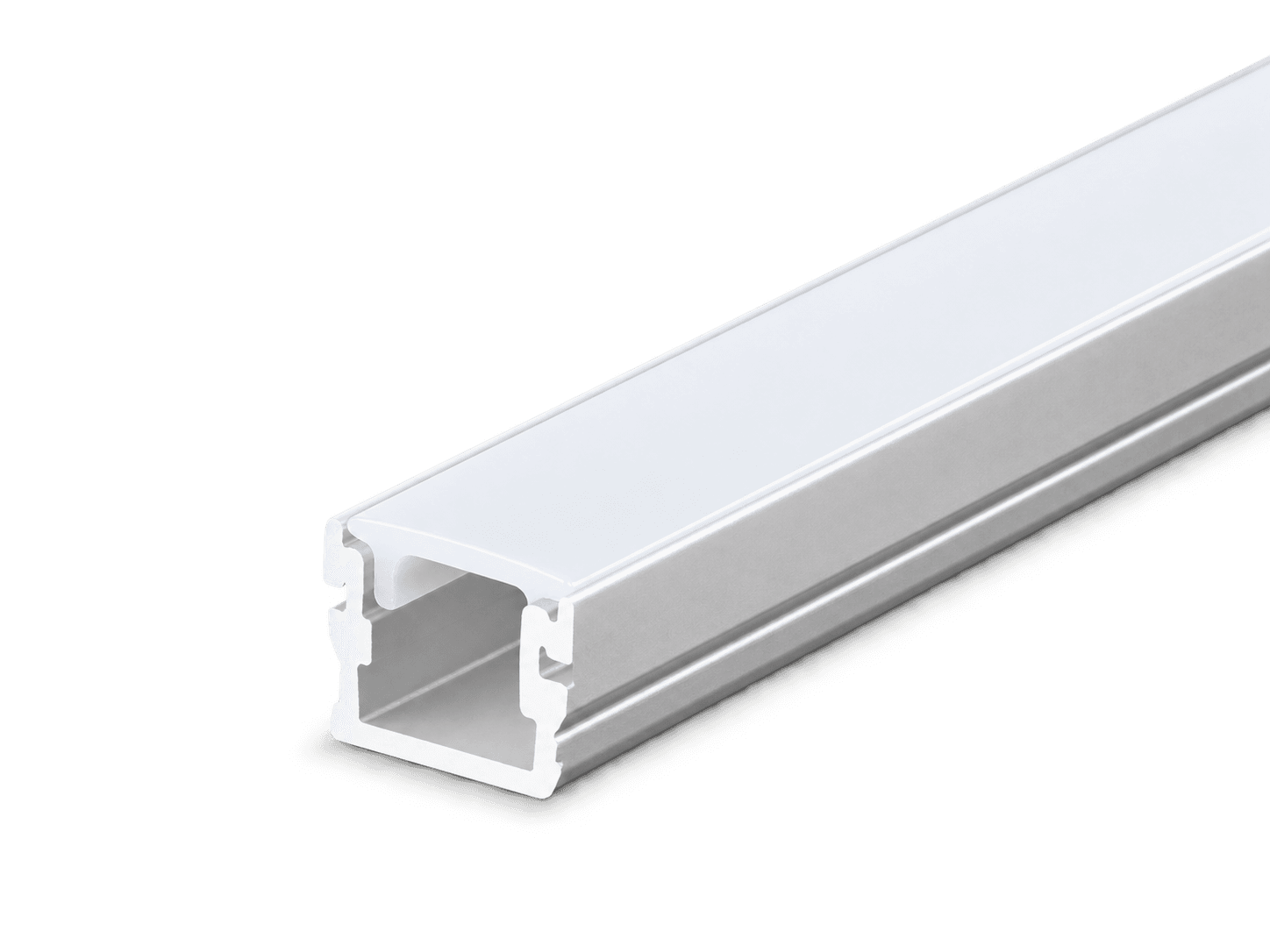
NY-XT209
A compact square section with an opal cover for surface-mounted lighting assemblies where installation space is limited.
View Product Details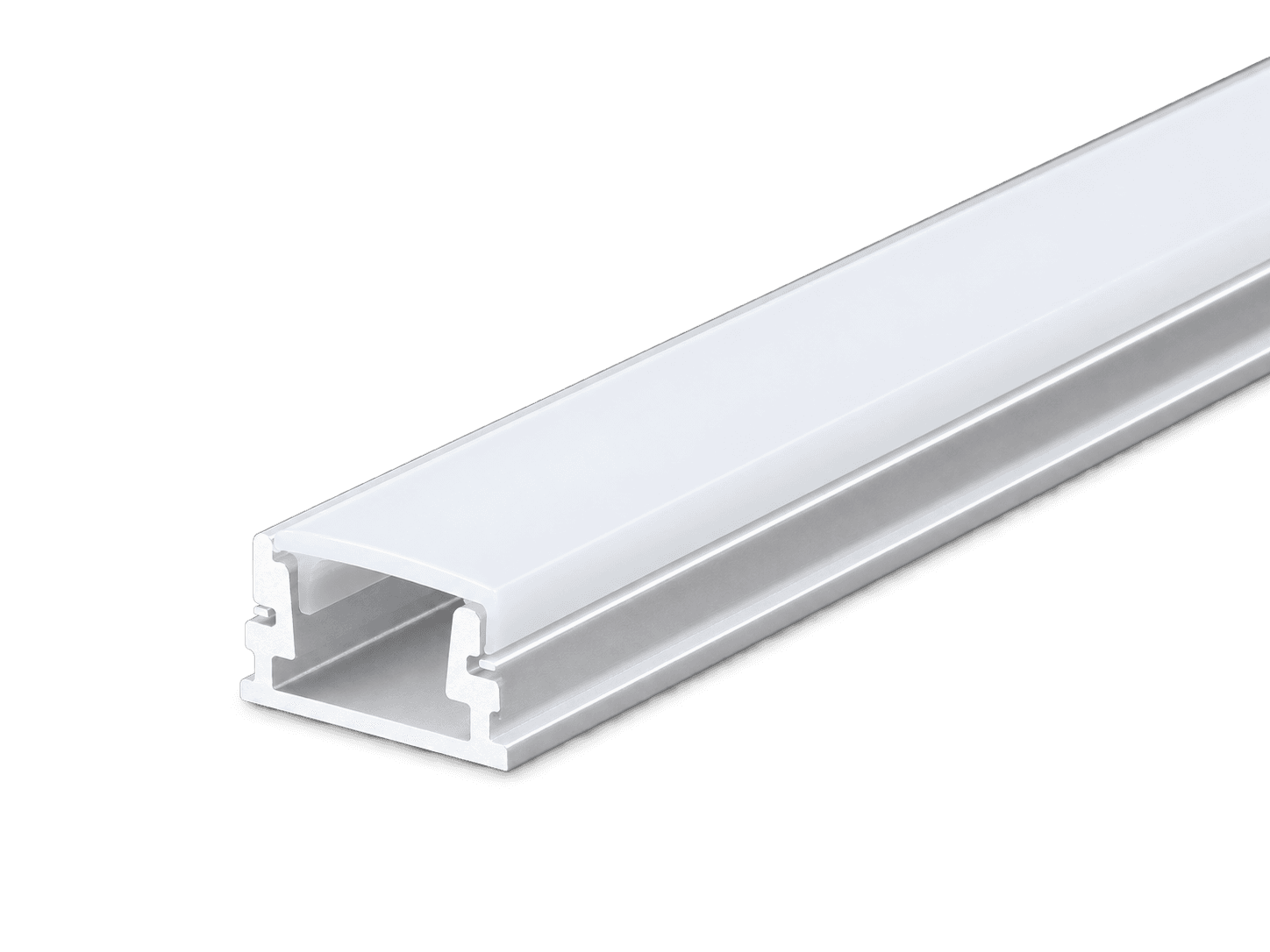
NY-XT268
A low rectangular section with an opal cover for lighting designs that need a wider, shallow surface-mounted channel.
View Product Details
Share this guide
Tell us what you need
Send Your Project Requirements
Share your contact details and tell us which LED profiles you need.
Explore custom profile options