
5000K vs 6000K LED Color Temperature
5000K and 6000K both look like cool white, but they feel different in a room. Learn how each one looks, where each works best, and how to choose.
On This Page
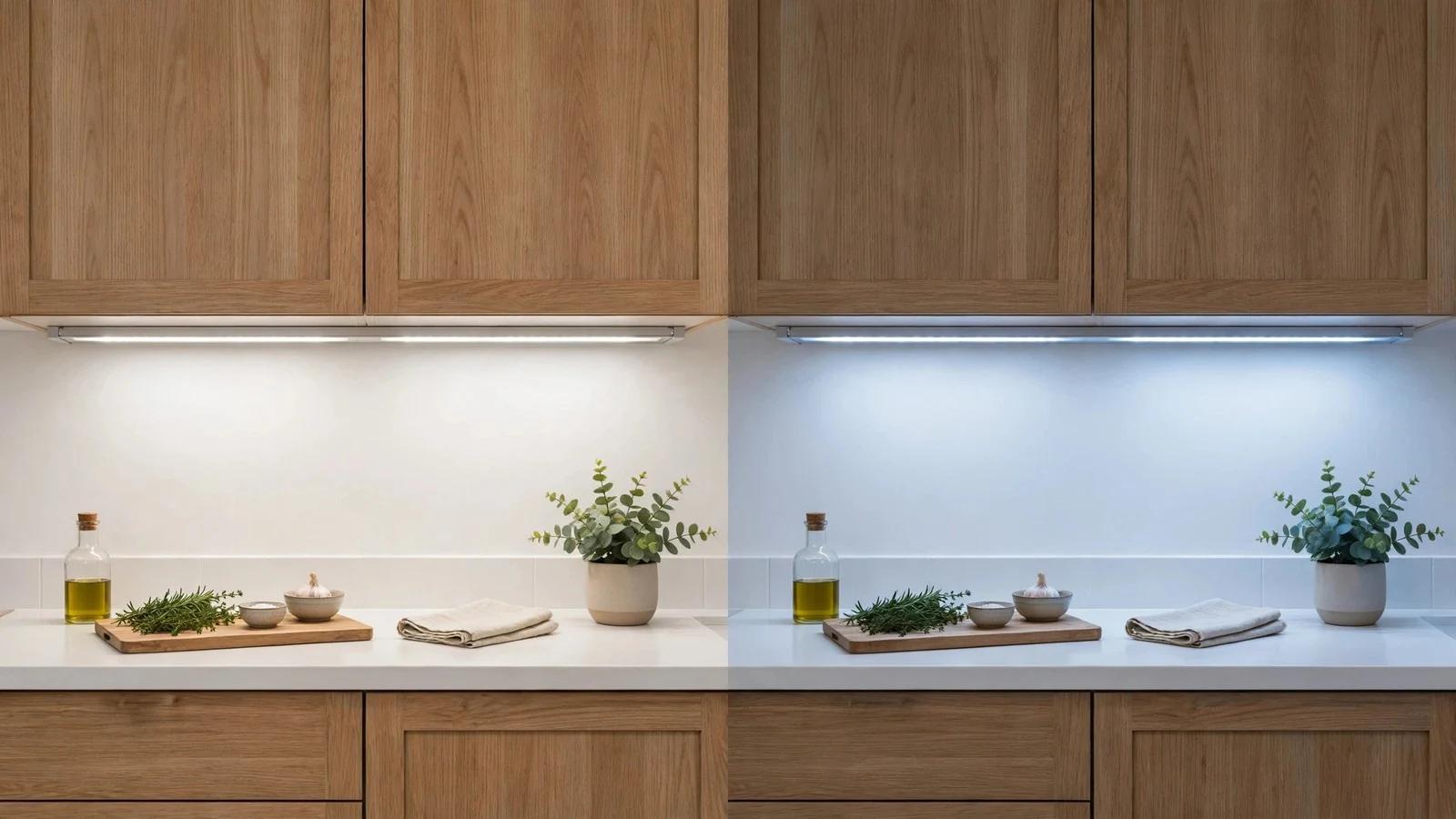
5000K and 6000K are both cool white light, but they feel different in a room. 5000K is a neutral white that looks close to midday daylight, with clean color and no strong tint. 6000K is cooler and sharper, with a clear blue tint that makes white surfaces look icy. Choose 5000K for rooms where people work, cook, or shop, and 6000K for task areas where sharp detail matters most.
The gap between the two settings is small on paper, yet it is easy to see once the lights are on. A 5000K strip makes a kitchen feel bright and natural, while a 6000K strip in the same room can feel cold and stark. This guide compares the two settings side by side, explains how color temperature differs from brightness and CRI, and ends with a checklist.
Two related guides cover the wider topics. Our guide to LED color temperatures explains the full range of color temperature settings, while a separate guide covers CRI and color accuracy. This article stays narrow: it compares only 5000K and 6000K, the two cool white settings buyers confuse most often.
What 5000K looks like
5000K light looks like pure white with no warm glow and no blue cast. It is close to the light of the midday sun, so colors under it look natural and easy to read. White walls stay white, wood keeps its true tone, and printed labels stay easy to read. That is why 5000K is the default choice for offices, kitchens, classrooms, and retail floors.
People can work under 5000K light for long hours without feeling strained, because the light is bright without feeling harsh. It suits rooms where the eye moves between tasks, screens, and people, since nothing in the light pulls attention away. In a kitchen, it shows the true color of food and worktops, which helps with cooking and cleaning.
What 6000K looks like
6000K light is a cooler white with a clear blue tint, close to bright daylight on a cloudy day. It makes edges look sharper and contrast look higher, so small details stand out more clearly. White surfaces can look slightly icy, and skin tones can look paler than they do under 5000K light. That cool, sharp feel is useful for inspection, but it can feel cold in a room meant for relaxing.
At the same lumen output, a 6000K strip can feel brighter than a 5000K strip, even though the measured brightness is the same. The blue tint raises contrast, and the eye reads higher contrast as more light. This effect is useful in a garage or warehouse, where the goal is to see clearly and spot details fast.
5000K vs 6000K at a glance
| 5000K | 6000K | |
|---|---|---|
| Light color | Neutral white, close to midday daylight | Cool white with a clear blue tint |
| Feel | Clean, bright, and natural | Sharp, crisp, and slightly icy |
| Glare | Low when diffused in a profile | Higher, so a diffuser matters more |
| Eye comfort | Comfortable for long hours | Tiring over long hours in living spaces |
| Best rooms | Offices, kitchens, retail, living areas | Garages, workshops, warehouses, security areas |
Use the table as a first filter, then match the setting to the room. If people will spend hours in the space, 5000K is the safer default. If the space is used for short, detail-heavy tasks, 6000K earns its place. When in doubt, test a sample strip in the real room before you order in bulk.
Color temperature, brightness, and CRI are three separate choices
Buyers often treat color temperature, brightness, and CRI as one choice, but they are three independent dimensions.
| What it decides | What it changes | How to choose it | |
|---|---|---|---|
| Color temperature | Whether light looks warm or cool | The mood of the room | Pick it for the room and its use |
| Brightness | How much light the strip gives | How well you can see | Check the lumen rating on the datasheet |
| CRI | How true colors look under the light | The accuracy of reds, skin, and wood | Ask the supplier for the stated CRI value |
Brightness is measured in lumens, and it has nothing to do with color temperature. A 5000K strip and a 6000K strip with the same lumen rating give the same amount of light. The 6000K strip only feels brighter, because its blue tint raises contrast. If a room feels dim, the fix is more lumens or more strips, not a cooler color temperature.
CRI describes how faithfully colors look under a light, and it is independent of color temperature. A warm strip and a cool strip can share the same CRI, and a high-CRI strip can be warm or cool. Ask the supplier for the CRI value of the exact strip, and test a sample against the real materials it will light. Our CRI guide explains how color accuracy works and how to judge it before you buy.
One more check matters when you order: all strips for a project should come from the same production batch. Color can shift slightly between batches, even when the stated color temperature is the same. Our guide to LED color inconsistency across runs explains what to check when an order arrives in more than one batch.
How the profile and diffuser affect the light
The strip sets the color temperature, but the profile and diffuser shape how that light reaches the room. A clear diffuser keeps the light crisp, which suits 6000K task lighting, while an opal diffuser softens the light and cuts glare. With 6000K strips, a diffuser matters more, because the cooler light shows dots and glare more easily. Test the strip, profile, and diffuser together, since the three parts decide the final look as a set.
Where each one works best
Choose 5000K for rooms where people spend time and where true color matters. Offices, kitchens, classrooms, and retail floors all suit 5000K, because the light stays bright without feeling cold. Living rooms can work with 5000K too, if the goal is a clean, bright feel rather than a warm, soft one. Bathrooms suit 5000K as well, since true skin tones matter at the mirror.
Choose 6000K for spaces where sharp detail and alertness matter more than comfort. Garages, workshops, warehouses, and security areas all suit 6000K, because contrast helps the eye pick out detail fast. Task benches and inspection stations are good fits too, especially where small parts or fine print are involved. Keep 6000K out of bedrooms and living rooms, where its cold tint can feel unwelcome after dark.
Some projects need both settings in different rooms, and that is fine, since each room gets the light that suits its use. Keep one setting per room, though, because mixing 5000K and 6000K in the same space makes the difference stand out. Order strips for each room from the same batch, so the color stays even across the whole project.
Room-by-room decision checklist
Work through this checklist room by room before you place an order. It takes a few minutes, and it stops the most common mistake: picking one color temperature for a whole project.
- Office or study: choose 5000K for long hours at a desk or screen.
- Kitchen: choose 5000K so food and worktop colors stay true.
- Retail floor or display: choose 5000K for natural product colors.
- Living room: choose 5000K for a bright feel, or a warmer setting if the room is for relaxing.
- Bathroom mirror: choose 5000K for true skin tones.
- Garage or workshop: choose 6000K for sharp detail and contrast.
- Warehouse or storage: choose 6000K for clear visibility across large areas.
- Bedroom: avoid 6000K, since its cold tint fights rest.
Test a sample before you order in bulk
A sample strip costs little, and it answers the question better than any guide can. Put the sample in the profile and diffuser you plan to use, then switch it on in the real room. Look at the walls, the worktops, and the materials the light will fall on. If the light feels right at night as well as in the day, you have the right setting.
Ordering LED profiles for a 5000K or 6000K project
The profile you choose shapes how the light looks, because it holds the strip, spreads heat, and carries the diffuser. A diffuser that matches the strip width gives an even line of light with no visible dots, which matters more with 6000K light. Ask for a sample of the exact strip and profile, so you can judge the real color before you commit to a bulk order.
NIUYUAN is a LED aluminum profile manufacturer founded in 2012, with 6 in-house extrusion lines and OEM/ODM support. The factory covers 31,706 m², and production uses 6063-T5 aluminum alloy. NIUYUAN holds ISO 9001, RoHS, and CE certification. The minimum order quantity is 1000 pieces, and lead time is 20–30 days from prepayment.
In-stock items arrive in 3–7 days, while custom orders take 25–30 days. New tooling takes about 7 days, and standard samples take about 7 days. Samples are free with freight collect. For custom lengths or profiles, see our custom LED aluminum profiles page.
FAQs
What is the difference between 5000K and 6000K LED light?
5000K is a neutral white close to midday daylight, while 6000K is a cooler white with a clear blue tint. Both look like cool white at first glance, but 6000K feels sharper and colder in a room. The two settings give the same measured brightness at the same lumen rating, so the difference is only in how the light looks and feels.
Which is better, 5000K or 6000K?
Neither setting is better in general. Choose 5000K for offices, kitchens, retail, and other rooms where people spend long hours. Choose 6000K for garages, workshops, warehouses, and other task areas where sharp detail matters most. Match the setting to the room, not to a general ranking.
Is 6000K brighter than 5000K?
No, not in measured brightness. A 5000K strip and a 6000K strip with the same lumen rating give the same amount of light. The 6000K strip only feels brighter, because its blue tint raises contrast and the eye reads higher contrast as more light.
Does color temperature affect CRI?
No. Color temperature decides whether light looks warm or cool, while CRI decides how true colors look under that light. A 5000K strip and a 6000K strip can have the same CRI. Decide the color temperature first to set the mood, then check the CRI value of the exact strip.
Should I use the same color temperature for a whole project?
Use one setting per room, but feel free to use different settings in different rooms. Mixing 5000K and 6000K in the same space makes the difference stand out, so keep each room consistent. Order all strips for one project from the same batch, so the color stays even across the installation.
Frequently asked questions
What is the difference between 5000K and 6000K LED light?
5000K is a neutral white close to midday daylight, while 6000K is a cooler white with a clear blue tint. Both look like cool white at first glance, but 6000K feels sharper and colder in a room. The two settings give the same measured brightness at the same lumen rating, so the difference is only in how the light looks and feels.
Which is better, 5000K or 6000K?
Neither setting is better in general. Choose 5000K for offices, kitchens, retail, and other rooms where people spend long hours. Choose 6000K for garages, workshops, warehouses, and other task areas where sharp detail matters most. Match the setting to the room, not to a general ranking.
Is 6000K brighter than 5000K?
No, not in measured brightness. A 5000K strip and a 6000K strip with the same lumen rating give the same amount of light. The 6000K strip only feels brighter, because its blue tint raises contrast and the eye reads higher contrast as more light.
Does color temperature affect CRI?
No. Color temperature decides whether light looks warm or cool, while CRI decides how true colors look under that light. A 5000K strip and a 6000K strip can have the same CRI. Decide the color temperature first to set the mood, then check the CRI value of the exact strip.
Should I use the same color temperature for a whole project?
Use one setting per room, but feel free to use different settings in different rooms. Mixing 5000K and 6000K in the same space makes the difference stand out, so keep each room consistent. Order all strips for one project from the same batch, so the color stays even across the installation.

Share this guide
Tell us what you need
Send Your Project Requirements
Share your contact details and tell us which LED profiles you need.
Explore custom profile options