
Anodized vs Powder-Coated LED Profiles
Anodized or powder-coated LED profiles? Compare the two finishes on look, wear, heat, color and fit, then pick the right one for your project.
On This Page
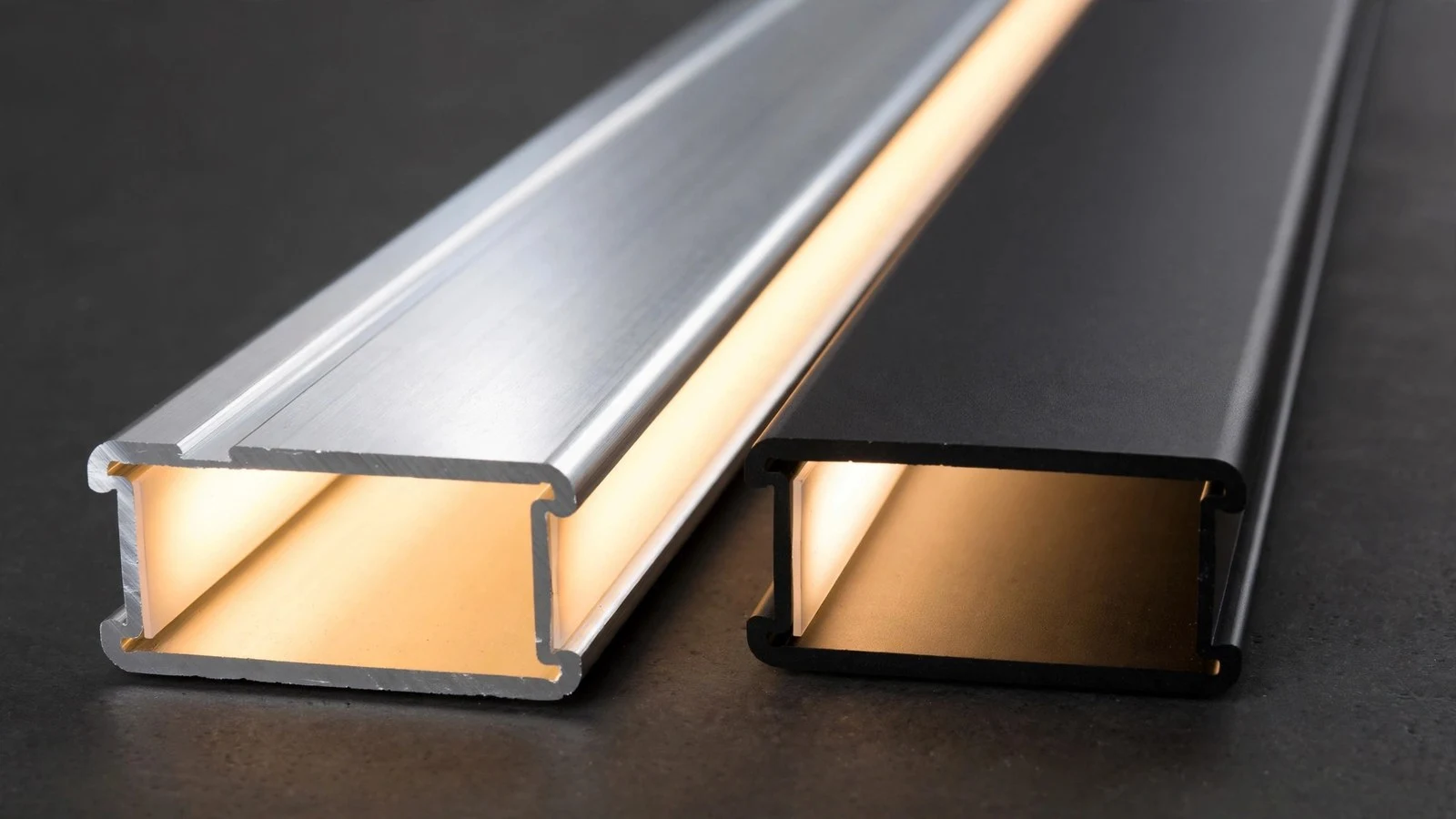
Anodized and powder-coated LED profiles do the same job in different ways. Anodizing grows a hard oxide layer out of the aluminum itself, so the finish is part of the metal. Powder coating sprays a dry powder onto the surface and bakes it into a solid film, so the finish sits on top of the metal.
Pick anodizing when you want a metal look that resists scratches and wear. Pick powder coating when you want a specific color or a tough coat for harsh weather. The right choice depends on where the profile will live and how it will be used.
What anodizing actually is
Anodizing is an electrochemical process. The profile is placed in an acid bath, and an electric current grows a layer of aluminum oxide on its surface. The layer is not paint, and it is not a separate skin. It forms from the aluminum itself, so it cannot peel off.
The metal keeps its natural sheen, and the surface feels cool and hard to the touch. Silver and black are the most common anodized colors for LED profiles. The look stays close to bare metal, which suits modern interiors and retail displays.
What powder coating actually is
Powder coating starts with a dry powder made of resin and pigment. An electrostatic gun sprays the powder onto the grounded profile, and the charge holds it in place. The coated profile then goes into an oven, where heat melts the powder into a smooth, solid film. The film covers the whole surface in one even layer. It hides small marks in the metal and gives a soft, matte or satin look.
Color is the big strength of powder coating. The powder can be mixed to match almost any color reference, including designer shades and brand colors. The film is thicker than an anodized layer, so it adds a small amount to the profile size. That extra thickness can matter where parts must fit tightly, such as end caps and connectors. Ask the supplier to check the fit with a finished sample before you order in bulk.
Anodized vs powder-coated at a glance
| Feature | Anodized | Powder-coated |
|---|---|---|
| How it is made | Electric current grows an oxide layer from the aluminum itself | Dry powder is sprayed on, then baked into a solid film |
| Look and feel | Metallic sheen, cool and hard to the touch | Soft matte or satin look, hides small marks in the metal |
| Peeling | Cannot peel, because the layer is part of the metal | Can chip if it takes a hard knock, but chips can be touched up |
| Scratch resistance | High, the oxide layer is hard and part of the metal | Moderate, the film is softer than an oxide layer |
| Heat tendency | Thin layer, so heat passes into the profile with little resistance | Thicker film adds a small barrier, but the difference is small in practice |
| Color range | Small, silver and black are the most common | Wide, can be mixed to match almost any color reference |
| Outdoor and coastal use | Good for general outdoor use, but less sealing than a thick film | Good for harsh outdoor and coastal sites, the film seals the surface |
| End cap fit | Little change to size, so standard end caps fit as expected | Extra film thickness can tighten the fit, so check with a sample |
Read the table by row, not by column. No finish wins on every row. Anodizing wins on hardness and the metal look, while powder coating wins on color and weather sealing. Your project decides which row matters most, so rank the rows before you compare prices.
How each finish handles wear and weather
Anodizing resists scratches well, because the oxide layer is hard and part of the metal. A key or a tool edge is less likely to mark it than a painted surface. The layer also resists fading, because the color sits inside the oxide, not in a film on top. For floor profiles and walkways, where feet and trolleys pass over the channel, that hardness is a real advantage.
Powder coating resists weather well, because the film seals the whole surface against rain and salt air. A thick, even film keeps moisture away from the aluminum, which suits harsh outdoor sites and coastal projects. The film can chip if it takes a hard knock, and a chip can be touched up on site.
A scratch in an anodized layer is harder to repair, because the color is part of the metal. A repair kit cannot restore the original oxide, so a visible scratch often stays visible. Choose by the risk your site faces: constant foot traffic, or constant weather.
Heat: does the finish change cooling?
Heat moves through both finishes into the aluminum profile, which acts as the heat sink for the LED strip. An anodized layer is thin and part of the metal, so heat passes through it with little resistance. A powder-coated film is thicker, so it adds a small barrier between the strip and the metal.
In practice the difference is small, and the profile size and strip power matter far more. Do not choose a finish for heat alone, and check the thermal design of the whole profile instead. Confirm the strip power and the profile size with the supplier, and judge cooling by the full system, not by the finish.
Which finish fits which project
For a floor profile or a walkway channel, choose anodizing. Feet, wheels and cleaning tools cross the profile every day, and a hard oxide layer takes that wear in its stride. The metal look also suits commercial floors, where a painted finish would show scuffs sooner. Ask for a sample and drag a key across it before you commit.
For harsh outdoor sites and coastal projects, choose powder coating. The thick film seals the aluminum against rain, salt and spray, and it holds its color in strong sun. Our guide to outdoor and wet-area LED profiles explains how to plan a full outdoor install, from drainage to sealing. Confirm the exact finish spec with the supplier and test a sample outdoors before you order in bulk.
For a designer-specified color, choose powder coating. An interior designer may ask for a precise shade to match a wall, a cabinet or a brand color. Powder coating can be mixed to that reference, while anodizing offers a much smaller color range. Send the designer a finished sample and get written approval before production starts.
For a tight budget, compare both finishes on the full order, not on the finish alone. Anodizing and powder coating differ in process cost, and the gap changes with order size and profile shape. A simple profile in a standard color may cost less in one finish, while a custom color may cost less in the other.
Ask for quotes in both finishes, then weigh the price against the wear and the look you need. Our office and commercial LED profiles guide shows where each finish is most often used in workspaces.
How to judge a finish sample
Always judge a finish on a real sample, not on a photo. Photos hide the texture, and screens shift colors, so a sample is the only fair test. Hold the sample next to the material it must match, and look at it in the light where it will be installed. Check the edges and the cut ends, where a thin or uneven finish shows first.
Fit the sample into the profile and the end caps you plan to use. A powder-coated sample may fit more tightly than an anodized one, because the film adds thickness. Slide the diffuser in and out, and check that the end cap sits flush. If the fit is tight, ask the supplier to confirm the tolerance before production starts.
How this guide differs from our finish guide
We already publish a finish guide for buyers. Our LED aluminum profile finishes guide explains how to specify a finish and check a sample, from color references to cut edges. This article does a different job: it compares the two finishes themselves, so you can choose between them. Read this guide to pick a finish, then use the finish guide to specify it and check the sample.
Questions to ask before you order
Ask these questions before you place an order, because the finish is hard to change once production starts. Write the answers into the order, so the factory and the buyer agree on the same finish.
- Which finishes can you offer for this profile model, anodizing or powder coating?
- Can you match this color reference, and can you send a finished sample?
- How will the finish affect the fit of end caps and connectors?
- What is the price difference between the two finishes for this order?
- How should the finished profile be stored and handled on site?
- What does the sample approval process look like, and how long does it take?
Ordering LED aluminum profiles from NIUYUAN
NIUYUAN is a LED aluminum profile manufacturer founded in 2012, with 6 in-house extrusion lines and OEM/ODM support. The factory covers 31,706 m², and profiles are made from 6063-T5 aluminum alloy. The company holds ISO 9001, RoHS and CE certification. NIUYUAN supplies the aluminum profile, not the LED strip or the driver, so strips and power supplies are sourced separately.
The minimum order quantity is 1000 pieces. Lead time is 20–30 days from prepayment, and in-stock profiles ship in 3–7 days, while custom profiles take 25–30 days. New tooling takes about 7 days, and standard samples take about 7 days, and samples are free with freight collect.
For anodizing and powder coating, NIUYUAN can discuss both finishes for a selected profile. Confirm the available options and requirements for your order, and ask for a finished sample before you commit. For custom lengths or profiles, see our custom LED aluminum profiles page.
Frequently asked questions
Which is better, anodized or powder-coated LED profiles?
Neither is better for every project. Anodizing suits heavy wear and a metal look, because the oxide layer is hard and part of the metal. Powder coating suits custom colors and harsh weather, because the film seals the surface and can match any color reference. Choose by the site, the look and the budget.
Can anodized LED profiles peel?
No. Anodizing grows an oxide layer out of the aluminum itself, so there is no film to peel off. The finish can scratch under a hard knock, but it cannot lift away from the metal like paint can.
Can powder-coated LED profiles match any color?
Powder coating can be mixed to match almost any color reference, including designer shades and brand colors. NIUYUAN can discuss color options for a selected profile, so confirm the exact color and ask for a finished sample before you order.
Do powder-coated profiles fit end caps the same way?
Not always. The powder film is thicker than an anodized layer, so it can change the fit of end caps and connectors. Ask the supplier to check the fit with a finished sample before you order in bulk.
Does NIUYUAN offer both anodizing and powder coating?
Yes, NIUYUAN can discuss both anodizing and powder coating for a selected profile. The available options, colors and any extra cost depend on the order, so confirm them in writing and ask for a finished sample.

Share this guide
Tell us what you need
Send Your Project Requirements
Share your contact details and tell us which LED profiles you need.
Explore custom profile options