
How to Choose the Best LED Light Strip Aluminum Channel
Compare value, balanced, and architectural LED aluminum channels by heat, light quality, kit, and price — then pick the tier that fits your project.
On This Page
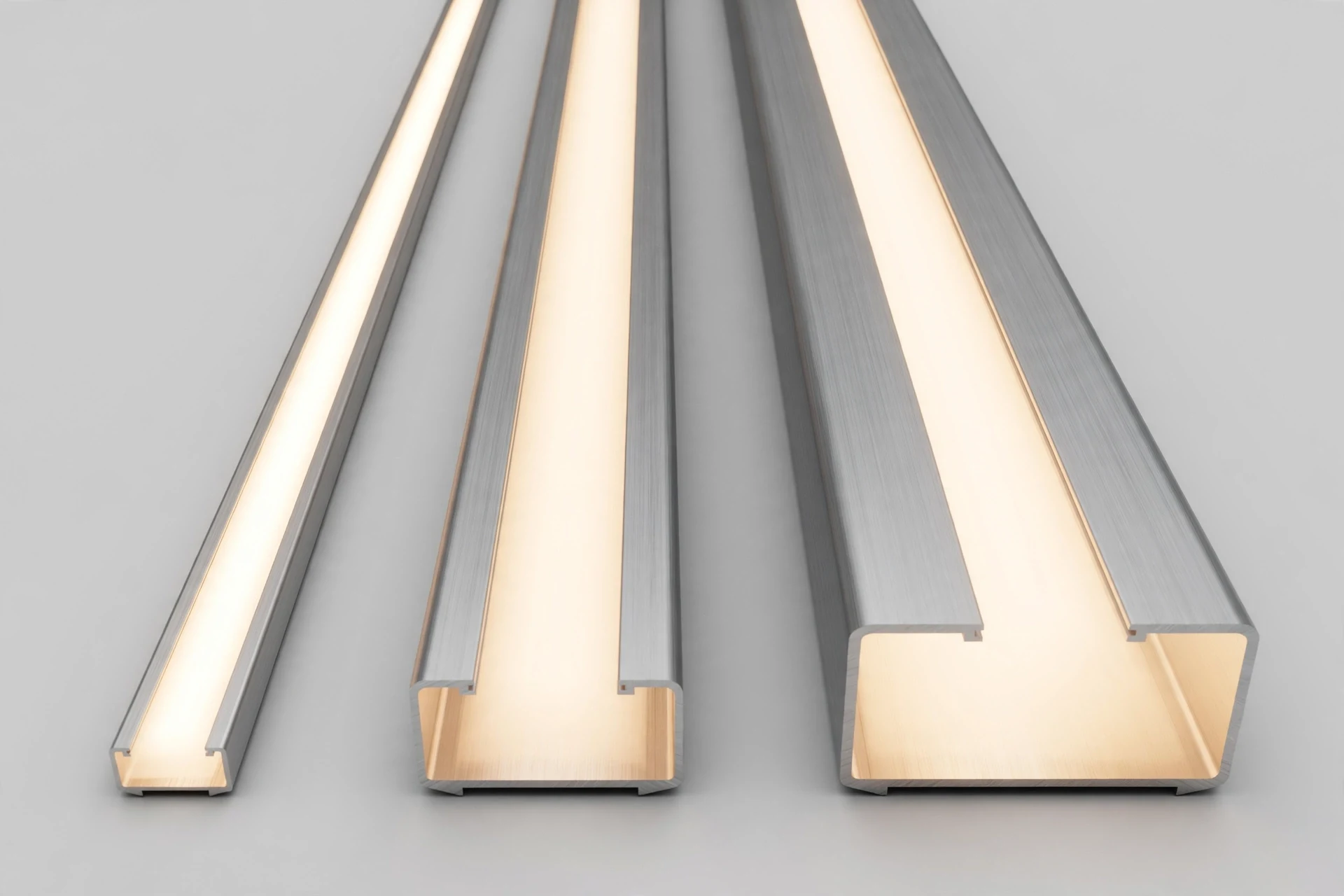
The best LED aluminum channel is not one product, but the tier that matches your heat load, your light line, and your budget. For most projects, three tiers cover the choice: value, balanced, and architectural.
Pick the tier first, then the mounting type, since a value channel can serve a hidden run well. The same channel can disappoint on an open shelf where every dot shows. This guide compares the tiers side by side, so you can see what each step up buys and what it costs.
The three tiers at a glance
Use the table below as a shortlist, not a verdict, since each tier suits a different mix of heat, light quality, and cost. Read the rows for the job you have, then check the sections that follow for the tradeoffs behind each rating.
| Tier | Heat handling | Light quality | Diffuser choice | Kit completeness | Price position |
|---|---|---|---|---|---|
| Value | Light strips and short runs | Dots may show with sparse strips | Flat cover, basic range | Channel, sometimes clips | Lowest |
| Balanced | Most home and office strips | Smooth line with common strips | Opal or frosted, wider range | Channel, cover, end caps, clips | Middle |
| Architectural | High-output or enclosed runs | Smoothest line, deeper body | Opal, tall, or matched covers | Full matched kit and finishes | Highest |
Compare offers on the same basis, since a low price means little if the cover, end caps, or clips are missing. Note the tier, not just the price, on every quote you request for the same job.
Heat: the tier you cannot see
Heat is the quiet reason channels fail early, and an aluminum channel gives heat a path away from the strip. A heavier body and a larger exposed surface move heat better than a thin, enclosed one. That is why high-output strips and enclosed cabinets call for a higher tier.
Do not judge heat by weight alone. The strip must sit flat against the metal, and the channel must have room to shed heat after fitting. A sample run tells you more than a catalog photo, and our heat-management guide explains the full thermal path.
Buying guides commonly list 6063-T5, and sometimes 6005-T6, as the alloys to look for.
Check three things before you approve a tier for heat. Start with the strip power per meter, and whether the run sits in open air or inside joinery. Also check whether the cover and clips trap heat around the strip.
Light quality: depth, diffuser, and strip density
A smooth light line comes from geometry, not luck, since a deeper channel puts more distance between the strip and the cover. That distance blurs each diode into a continuous line. A shallow channel can look fine when the strip is hidden, but it shows dots where the line is visible.
Diffuser choice matters as much as depth. An opal cover hides dots best, while a clear cover keeps brightness but shows each diode. In one maker's own test, a deep channel with a flat cover lost about 36 percent of brightness. A shallow channel in the same test lost about 22 percent. Black deep channels lost about 58 percent, against about 36 percent for bare aluminum.
Covers are model-specific, so check the diffuser options for your exact profile before you order.
Kit completeness and install effort
A channel is only part of the assembly, since end caps, clips, and connectors decide whether the run looks finished and stays serviceable. Value kits ship the channel alone, while balanced and architectural kits tend to include matched covers, end caps, and clips.
Install effort rises with the tier, and Surface-mounted ranges go up fast with simple clips and open access. Recessed ranges need grooves, finish matching, and service access planned before cutting. If your team cannot cut or finish on site, a surface-mounted balanced tier is often the safer pick.
Count the parts before you compare prices. A quote that omits end caps or clips looks cheaper until you buy them separately. Ask for a full component list in writing with every tier you compare.
Price and volume: where the tiers really separate
Price follows the same order as the tiers, and one retail buying guide lists budget channels at about one to three dollars per foot. Mid-range sits at about three to six, and premium above six. Those bands describe retail single lengths, not project pricing, so treat them as a rough map rather than a quotation.
The same guide notes bulk orders of fifty feet or more often cut unit cost by roughly fifteen to thirty percent. For project work, the lever is different: agreed custom lengths and finishes, and kit scope drive the quote more than the per-foot band. Volume changes the picture, so compare quotes on the same component list, or the cheapest tier may hide missing parts.
Finishes also move price and lead time, so agree the reference in the finish guide before you approve a tier. Ask what the quote includes before you rank tiers by price. A bare channel, a full kit, and a finished assembly are three different offers. Rank them only after the component lists match.
Recommendation combos for home, commercial, and project work
Use the table below to start, then adjust for your site, since the suggested tier is a starting point rather than a rule. Visibility, heat, and service access can each easily push a job one tier up. A job that mixes visible and hidden runs can mix the tiers.
| Use case | Suggested tier | Why it fits | Confirm before ordering |
|---|---|---|---|
| Home retrofit, under-cabinet and shelves | Balanced | Smooth light without rework | Strip width and cover fit |
| Small commercial, retail and office | Balanced or architectural | Visible lines need a clean finish | Finish matching and repeat lengths |
| Large project, hotels and long runs | Architectural | Consistent finish and matched kits | Drawings, samples, and quote scope |
Use the higher tier where the line is seen every day, and the value tier where it stays hidden. Keep the visible finish consistent, so the mix does not show.
When in doubt, order a sample of the higher tier first. A short sample run settles arguments about dots, finish, and fit faster than any table.
Ordering checklist
Send the same spec with every tier you compare. Most retail channels fit strips about 8 to 12 millimeters wide, so record your strip width and connector size first.
- Strip width, power per meter, connector size, mounting type, and the space available on site.
- Cover type, the light line you need, finish reference, and visible faces.
- Lengths, quantities, and repeat-order needs.
- Component list: end caps, clips, and cable exits.
Compare the general selection criteria on our how-to-choose guide before you send the spec, since it covers mounting, space, and component fit in more depth.
One more check saves rework: confirm who supplies the strip, driver, and controls, since channels usually ship without them.
Put that scope in writing, and keep the approved spec with the order, so repeat runs match the first run.
If the finish must match nearby metalwork, send a physical reference. Color names alone do not guarantee a match across batches and materials.
Frequently asked questions
Is the most expensive channel always the best?
No, the best tier is the one that fits your heat, light line, and budget. A premium channel on a hidden run wastes money, while a value channel on a line costs more in rework.
Does a black channel change brightness?
Yes, if looks matter more than output. In one maker's own test, a black deep channel lost about 58 percent of brightness, against about 36 percent for bare aluminum. Check the result with a sample before you commit.
Do I need a deep channel for COB strips?
Not always, since COB strips already look continuous, so a shallow channel can work well. Depth still helps with heat and cover fit, so confirm both with the exact strip and cover.
Does an aluminum channel make the run waterproof?
No, a bare channel is not a waterproof fixture. Wet areas need a rated assembly with seals, end caps, and cable entries to match. Ask for evidence that covers the exact assembly you will receive.
Can I mix tiers in one project?
Yes, use the higher tier where the line is visible every day, and the value tier where it stays hidden. Keep the visible finish consistent across the whole job, so the change does not show.

Share this guide
Tell us what you need
Send Your Project Requirements
Share your contact details and tell us which LED profiles you need.
Explore custom profile options