
LED Profiles for Bathroom Lighting
Learn how to choose LED profiles for bathroom lighting by zone, from mirrors to niches. See placement, sealing and buying checks for damp rooms.
On This Page
Bathroom LED profile lighting means fitting a strip inside an aluminum profile, then mounting that profile where water and steam cannot reach the strip. The profile holds the strip straight, spreads the light, and acts as a heat sink. A diffuser softens the line of light so the mirror shows no harsh spots. End caps close the ends so steam and splashes stay out. This guide maps four positions to their zones, shapes, and key checks.
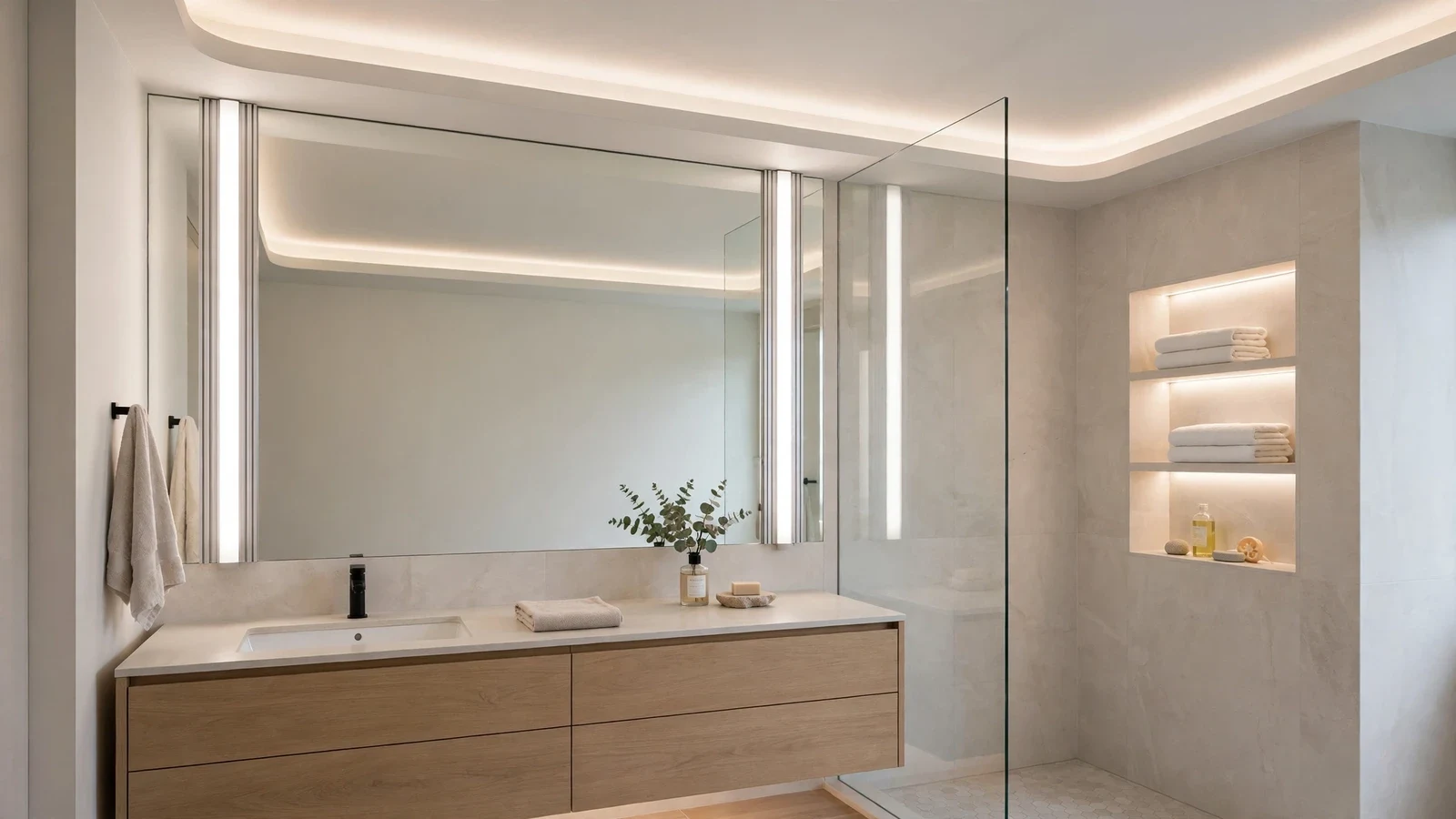
A bathroom is not one damp room. It has wet spots near the bath and shower, damp air near the basin, and drier corners. Each spot needs a different level of care, and the right profile shape also changes with the spot. A mirror needs soft front light, while a niche needs a slim recessed channel. A ceiling cove needs a hidden strip that washes light down the wall, so match the position first and then pick the profile.
Four Positions, Four Zones
Bathrooms are split into zones by how close each spot sits to water. Zone 0 covers the inside of the bath and shower tray. Zone 1 covers the space above the bath and shower, up to a set height. Zone 2 covers a band around zone 1, and spots outside these zones face less direct water. The table below maps each position to its usual zone.
| Position | Usual zone | Profile shape | Key requirement |
|---|---|---|---|
| Mirror front | Zone 2 or outside zones | Surface or recessed, with diffuser | Soft front light, no glare in the mirror |
| Niche or shelf | Zone 1 or 2 | Slim recessed | Sealed end caps, check local rules |
| Ceiling cove | Outside zones | Recessed or surface, hidden | Even wash down the wall |
| Skirting | Zone 2 or outside zones | Low surface profile | Clear of standing water, easy to clean |
Treat these IP figures as a common reference only. Zone 0 often calls for IP67, zone 1 for IP65, and zone 2 for IP44. They come from third party guides that cite BS7671, and local rules may differ. Always check local rules and the luminaire manual before you order. For the meaning of each IP code, see our IP ratings guide.
Profile Shape and Diffuser Choices
Surface profiles mount on the wall or ceiling with clips or screws. They suit mirrors and coves where you cannot cut a recess. Recessed profiles sit flush in a groove, so only the diffuser shows, and they suit niches and ceiling slots where a clean line matters. Corner profiles fit the angle where two walls meet, while plaster-in profiles hide the edge under plaster for a trimless look. Choose the shape by the surface you have.
A clear diffuser gives the brightest line and shows each LED dot. An opal diffuser softens the light and hides the dots, which suits mirrors and niches, while a frosted diffuser sits between the two. Match the diffuser to the viewing distance, because a mirror is viewed up close, so opal works best there. A cove is viewed from across the room, so a clear or frosted diffuser can work.
Mirror Lighting
The mirror light is the most used light in a bathroom, since people shave, apply makeup, and check their face there. Front light matters more than top light here, because a strip above the mirror casts shadows down the face. Strips on both sides light the face evenly.
A diffuser spreads the light so the mirror shows no bright dots. Pick a profile that sits flush or mounts neatly on the wall. Keep the driver in a dry place that you can reach later. Warm light flatters skin at the mirror, while cool light suits a bright family bathroom.
Niches and Shelves
A niche is a small recess cut into the shower or bath wall. It holds shampoo, soap, and razors within reach. A slim recessed profile fits along the top edge of the niche. It lights the shelf from above, so bottles cast no long shadows.
Seal both end caps so steam and splashes stay out of the profile. The strip, diffuser, and end caps work as one sealed unit. A profile alone carries no IP rating, so never treat it as waterproof by itself. Our waterproof profile guide covers sealing and wet-area choices in more depth.
Ceiling Coves and Skirting
A ceiling cove hides the strip above a ledge or behind a dropped edge. The light washes down the wall and lifts the room. It suits bathrooms with no window, where one ceiling lamp leaves dark corners. The profile sits out of direct spray, so sealing matters less here.
Still fit end caps, because steam rises and settles on every surface. A skirting profile that wipes clean runs low along the floor and marks the path at night, so keep it clear of standing water.
Steam, Heat, and Cleaning
Steam is the quiet threat in a bathroom, because it rises after every shower and settles on cool metal. A profile with sealed end caps keeps steam out of the strip channel. The aluminum body also sheds heat from the strip, which helps the strip last longer. Wipe the diffuser with a soft, damp cloth when it dulls, and never spray cleaner straight onto an open profile end.
Planning the Layout
Start with the mirror, since it sets the task light, and add the niche next so the shower shelf is lit from above. Then add the cove for general light, and the skirting for a night path.
Each layer should switch on its own, so a late-night visit needs no bright ceiling light. Sketch the four positions on a room plan before you order, and mark where each driver will sit in a dry, reachable place.
Common Mistakes to Avoid
Most bathroom profile failures come from a few common habits, and each one is easy to avoid once you know it. The list below covers the faults we see most often, so check your plan against each item before you order.
- A bare strip in a damp zone takes steam and splashes head on, so it fails early and looks uneven.
- A driver hidden behind tiles cannot be checked or swapped, so put it in a dry, reachable spot from the start.
- A low IP strip in zone 1 is a common fault, so check local rules and the luminaire manual before you order.
- One ceiling lamp only leaves the mirror and the niche in shadow, so add a second layer of light at the mirror.
- Skipping samples before a bulk order is risky, because a profile that looks right on paper may feel wrong in hand.
- A bare strip with no diffuser shows bright dots and harsh lines, so fit a diffuser on every visible run.
How to Buy: Questions to Ask
Ask these questions before you place an order, because the answers show whether the supplier has thought about damp rooms. They also stop surprises after the goods arrive, so bring the list to your supplier and tick each answer off. If you are still weighing shapes, our guide on how to pick the best channel compares the main profile types side by side.
- How are the end caps sealed, and what keeps steam out of the profile?
- Which diffuser suits a mirror, and which suits a niche?
- Where should the driver sit, and how do I reach it later?
- Can I see a sample first, and how long does it take to arrive?
- What is the minimum order, and what is the lead time for my size?
- Which profile shape fits a recessed niche, and which fits a surface cove?
- What finish and length options exist for the profile I need?
Ordering from NIUYUAN
NIUYUAN makes aluminum profiles in 6063-T5 alloy on six in-house extrusion lines. The factory covers 31,706 square metres and holds ISO 9001, RoHS, and CE certification. Profiles ship to North America, Europe, the Middle East, and Oceania, and more than 36,000 projects have used NIUYUAN profiles around the world. Standard samples are free, with freight collect, and arrive in about 7 days, while new tooling takes about 7 days for a custom shape.
The minimum order is 1,000 pieces for any profile, and lead time runs 20–30 days from prepayment. In-stock profiles ship in 3–7 days, and custom orders take 25–30 days, while NIUYUAN supplies profiles only, so source strips and drivers separately. For damp-room choices, our wet-area selection guide shows how outdoor and wet-area profiles differ.
Frequently asked questions
Can I use LED profiles in a bathroom?
Yes, when the profile is sealed and the position suits its zone. Fit end caps, choose a diffuser, and check local rules first. Keep the driver in a dry, reachable place.
Which profile works best at a bathroom mirror?
A surface or recessed profile with an opal diffuser works best. It gives soft front light with no bright dots. Side strips light the face more evenly than a single top strip.
Does a niche need a sealed profile?
Yes, in most cases. A niche sits close to water, so seal both end caps. Check local rules for the zone that applies to your niche.
Where should the bathroom LED driver go?
Put the driver in a dry place you can reach later, such as a cupboard outside the wet zones. Never hide it behind tiles. NIUYUAN supplies profiles only, so source the driver separately.
What should I ask before ordering bathroom profiles?
Ask about end cap sealing, diffuser choice, and driver placement. Ask for a sample and check it in hand. The minimum order is 1,000 pieces, and standard samples take about 7 days.

Share this guide
Tell us what you need
Send Your Project Requirements
Share your contact details and tell us which LED profiles you need.
Explore custom profile options