
LED Profiles for Restaurant Lighting
Restaurant lighting by zone: warm high-CRI dining rooms, layered bars, bright kitchens, separate controls. Profiles and ordering facts from NIUYUAN.
On This Page
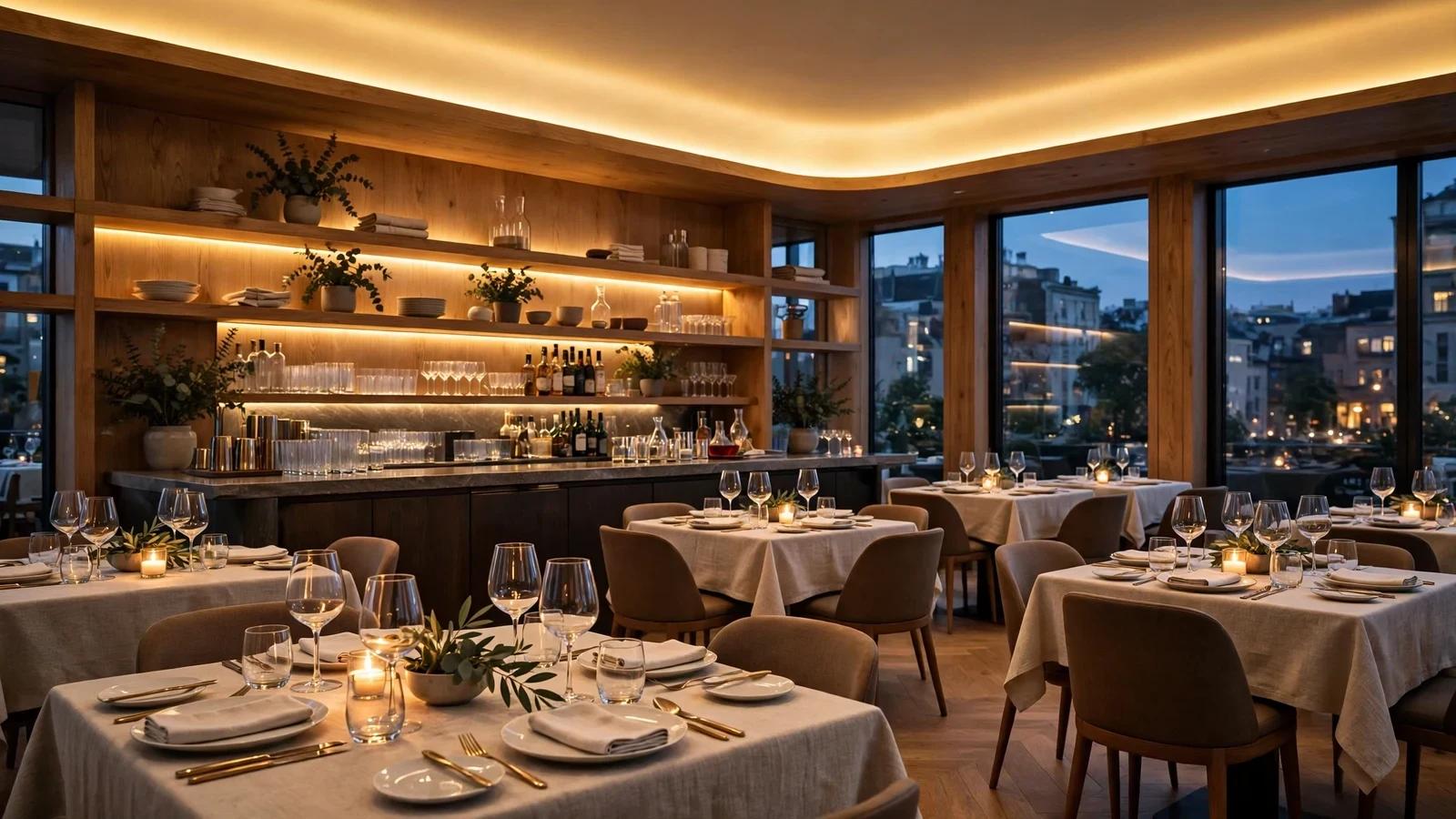
Restaurant lighting is set zone by zone, not with one color temperature and one brightness level for the whole room. The dining room needs warm light with high color rendering, so food and skin tones look natural. The bar needs layers of light and clear task light, so staff can work fast and guests can read the menu. The kitchen needs bright white light that meets food safety rules, so it stays on a separate control from the dining room.
Why one lighting setup cannot cover a restaurant
A restaurant is really several rooms that share one address. Guests eat in soft light, staff pour drinks under brighter light, and cooks work under the brightest light of all. One strip, one color temperature, and one dimmer cannot serve all three jobs at once. The result is usually a dining room that feels flat, a bar that glares, or a kitchen that strains the eye.
Good restaurant lighting starts with a simple map of the space. Mark the dining room, the bar, the private rooms, the kitchen, and the terrace as separate zones. Give each zone its own profile shape, color direction, and dimming control. Then check the whole plan twice: once for how it looks to guests, and once for how it works for staff.
The five zones at a glance
The table below sums up the five zones in one view. Use it as a first draft for your plan, then adjust each row to your own room sizes and ceiling heights. Color direction and color rendering matter more than exact brightness numbers at this stage. The color figures here follow widely shared guide suggestions, not NIUYUAN test results.
| Zone | Profile form | Color direction | Color rendering | Dimming suggestion |
|---|---|---|---|---|
| Dining room | Recessed cove profile or surface profile under shelves | Warm white, around 2700–3000K | High, CRI 90 or higher | Dimmable, scene set for dinner |
| Bar | Slim surface profile under the bar top and back bar shelves | Warm white, around 2700–3000K | High where food is served | Own dimmer, lower as the evening goes on |
| Private dining room | Recessed cove profile plus surface shelf profile | Warm white, adjustable | High, CRI 90 or higher | Widest range, own dimmer |
| Back of house | Surface profile with a closed cover | Cooler white, near 4000K | High, for food safety checks | Full brightness, own switch |
| Outdoor terrace | Weather rated profile with a sealed cover | Warm white for evening service | High for dining areas | Own control, follows the sunset |
Dining room: warm light, high color rendering
The dining room is where color rendering earns its keep. Food, wine, and skin tones all sit under the same light, so a low rendering score shows up on every plate. Many guides suggest warm white light around 2700–3000K with a CRI of 90 or higher for dining areas. That is a widely shared guide suggestion, not a NIUYUAN test result, so treat it as a starting point for samples.
Hide the strip inside a profile so guests see glow, not points of light. A recessed profile in a cove or a surface profile under a shelf both keep the source out of direct sight. Pair the profile with a frosted diffuser to soften the line of light and cut glare at the table. Ask for a sample with the diffuser fitted, because a bare strip and a diffused strip look very different.
Bar: layers, task light, and display
The bar does two jobs at once, so it needs two layers of light. Staff need clear task light to pour, cut, and wash, while guests need a softer glow that suits the mood. Put a strip in a slim profile under the bar top or along the back bar shelf for the working layer. Keep the front of the bar warm and dimmable, so the glow can drop as the evening gets later.
Back bar shelves are a display job, not a task job. A narrow profile with a frosted cover lights bottles from the front without throwing hard spots on glass. Warm white light suits most bars, and many guides point to the same 2700–3000K range used in dining rooms. If the bar serves food as well as drinks, ask for the higher color rendering option used in the dining room.
Private dining rooms: one room, several moods
A private room hosts lunches, dinners, and parties in the same week. One fixed scene cannot fit a business lunch and a birthday dinner, so this room needs the widest dimming range. Use a recessed cove profile for soft ceiling light and a surface profile under shelves for a low warm glow. Put the room on its own dimmer, so a change here never touches the main dining room.
Back of house: bright white light, separate control
The kitchen and prep areas follow a different rule from the dining room. Staff read labels, check meat color, and handle knives, so the light must be bright, even, and white. Many guides point to cooler white light near 4000K for kitchen work, with the dining room kept warm. That color split is a guide suggestion, not a NIUYUAN test result, and it is also why the kitchen needs its own switch.
Choose a profile that is easy to clean and sealed against steam and splashes. A surface profile with a closed cover suits most prep lines, and a recessed profile suits ceilings above wash areas. Do not run kitchen strips on the dining room dimmer, because a dimmed kitchen slows prep and raises risk. The separate control checklist later in this guide lists the split in full.
Outdoor terrace: weather first, mood second
A terrace strip faces rain, dust, and wide temperature swings, so weather protection comes before style. Pick a profile and cover rated for outdoor use, and mount it where water cannot pool on the seal. Warm light suits evening service, and a dimmer lets the terrace fade as daylight drops. Keep terrace controls apart from indoor zones, so a rainy night does not force a change indoors.
Color rendering first: the questions to ask before you order
Color rendering decides whether food looks fresh or tired, so ask about it before price and lead time. Three questions cover most of the risk, and a supplier who answers them clearly is usually the safer choice. Write the answers down with the quote, so the delivered strips match the samples you approved.
- Ask for the CRI value and the R9 value in writing, and ask which test the numbers come from.
- Ask for the color temperature range the strip can cover, and whether it can shift warm for dinner service.
- Ask which dimming protocols the driver supports, and confirm the protocol before you pick a driver.
- Ask for a lit sample with the diffuser fitted, and compare it against a plate of real food.
A high CRI number alone does not prove reds will look right, so ask for the R9 value too. No single number in this guide is a NIUYUAN test result, and no third party figure here is a general standard. Treat every rendering figure as a question to put to the supplier, then judge the lit sample with your own eyes.
Dimming: fix the protocol before you pick a driver
Dimming fails most often at the driver, not at the strip. A driver that does not match the dimming protocol can flicker, buzz, or refuse to dim at the low end. Fix the protocol first, then pick a driver that supports it, and keep that order for every zone. NIUYUAN supplies aluminum profiles only, so drivers and power supplies come from your own driver supplier. Our guide to dimming LED strip lights explains the common protocols in plain terms.
Separate controls: kitchen and dining room checklist
One shared dimmer is the most common control mistake in a restaurant. The kitchen needs full brightness during prep, while the dining room needs a soft glow at the same hour. Separate the two, and both rooms can work at their own level without a fight over one switch.
- Give the kitchen its own switch and its own dimmer, apart from every guest area.
- Give the bar its own dimmer, so last orders can stay bright while the dining room dims.
- Give each private room its own dimmer, so one booking never changes the light in another room.
- Give the terrace its own control, so outdoor light can follow the sunset without touching indoor scenes.
- Label every switch by zone at the panel, so new staff can find the right control on day one.
Ordering profiles for a restaurant project
Once the zones are set, ordering is a matter of matching profile forms to the plan. NIUYUAN makes aluminum profiles in 6063-T5 alloy, with six in-house extrusion lines behind the range. The factory covers 31,706 m², holds ISO 9001, RoHS, and CE certification, and employs more than 250 people. Orders ship to North America, Europe, the Middle East, and Oceania, with more than 36,000 projects completed worldwide.
The minimum order is 1,000 pieces, and lead time runs 20–30 days from prepayment. New tooling takes about 7 days, standard samples take about 7 days, and samples are free with freight collect. Stock items ship in 3–7 days, while custom orders take 25–30 days. Order samples early, because a lit sample with the diffuser fitted is the fastest way to judge color rendering.
Restaurant lighting sits inside a wider commercial plan, so compare it with nearby project types before you order. Our commercial LED aluminum profiles guide maps the shared choices across offices, shops, and hospitality spaces. Hotel corridor lighting shows how the same warm dimmable approach works along guest routes. Retail store lighting shows how display zones split from task zones, a split the bar can borrow.
A short plan to take to your supplier
Take this plan to your supplier and walk through it zone by zone. Confirm the profile form for each zone, the color direction, the rendering figures, and the dimming protocol in writing. Ask for lit samples with diffusers fitted, then judge them with real food under real service light. When the samples pass, the order is simple: one profile form per zone, one dimmer per zone, and one clear quote.
Frequently asked questions
What color temperature suits a restaurant dining room?
Many guides suggest warm white light around 2700–3000K with a CRI of 90 or higher for dining areas. That is a guide suggestion, not a NIUYUAN test result. Ask for a lit sample and judge the food under it.
Should the kitchen use the same light as the dining room?
No. Kitchens need bright white light for safe prep work, while dining rooms need warm dimmable light. Put the kitchen on its own switch and dimmer.
How do I choose a profile for a bar?
Use a slim profile under the bar top or along back bar shelves for task and display light, with a frosted cover to cut glare. Keep the front of the bar warm and dimmable.
What should I ask a supplier about color rendering?
Ask for the CRI and R9 values in writing, the color temperature range, and which dimming protocols the driver supports. Then compare a lit sample against real food.
What are NIUYUAN's minimum order and lead time for restaurant profiles?
The minimum order is 1,000 pieces. Lead time runs 20–30 days from prepayment, new tooling takes about 7 days, and standard samples take about 7 days and are free with freight collect.

Share this guide
Tell us what you need
Send Your Project Requirements
Share your contact details and tell us which LED profiles you need.
Explore custom profile options