
LED Profiles for Retail Stores
LED profiles for retail stores: how to light shelves, counters and window displays, cut glare, keep colours true and order with confidence.
On This Page
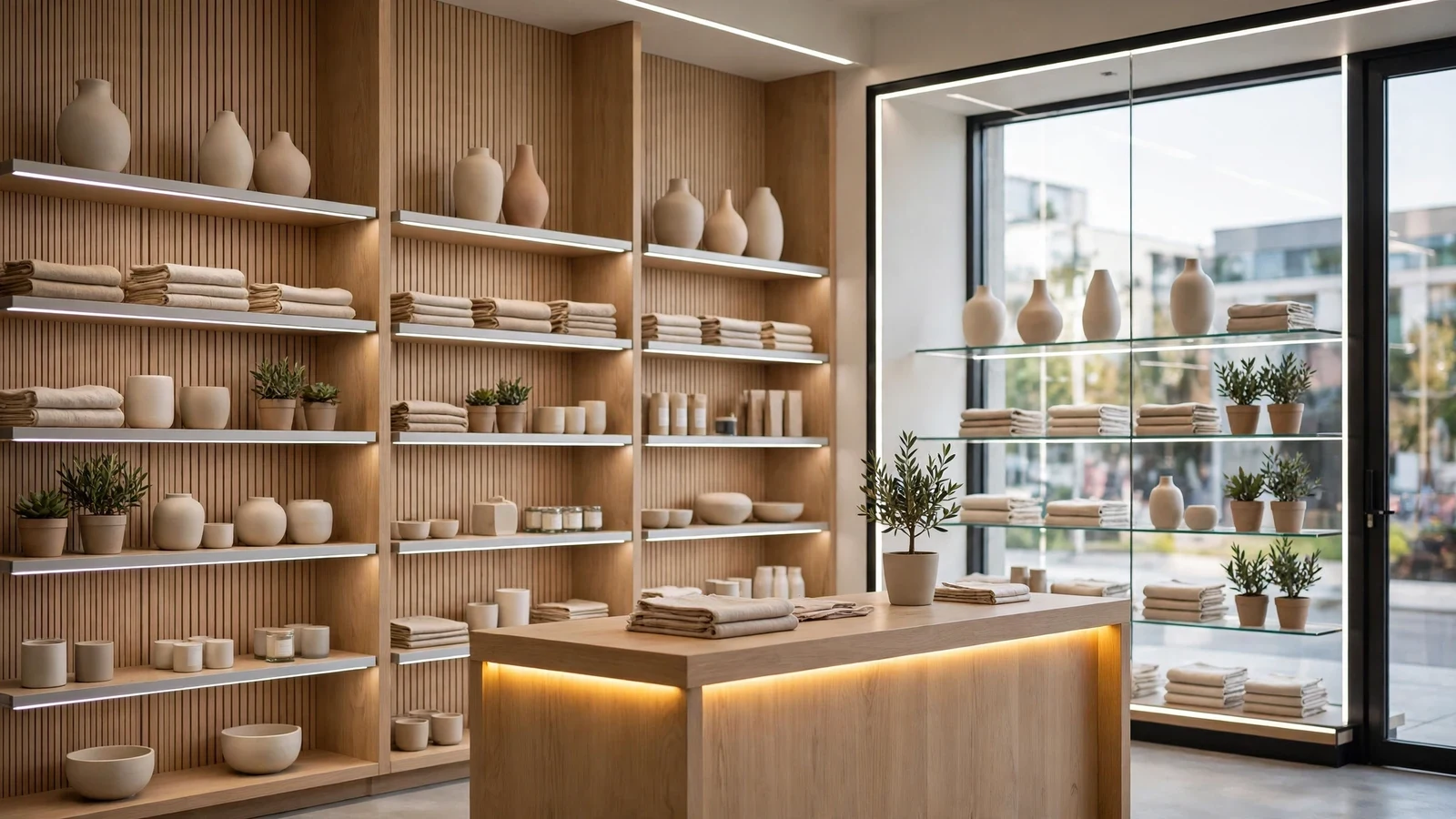
LED profiles for retail stores are aluminium channels on shelves, counters and in window displays, giving even, dot-free linear light that shows product colours truly. The light stays soft on the eye, so shoppers look at the goods, not at the source. A retail profile holds the LED strip, spreads its heat and shapes the light output.
This guide covers the three retail zones where profiles earn their keep: shelves, counters and window displays. Each zone asks for a different profile position, a different mount and a different test before you order. For the wider commercial picture, see the commercial LED aluminum profiles guide, which covers offices, lobbies and other shared spaces.
Why Retail Lighting Needs Its Own Profile Plan
A shop is not one room with one light, so a single profile choice rarely fits the whole store. Shelves need light on the product face, counters need light that flatters goods at close range, and windows need light that beats street daylight. Profiles let you place the light exactly where each zone needs it, instead of flooding the whole shop from the ceiling. They also hide the strip and its diodes, so the fitting itself stays out of sight.
Good retail light does two jobs at once, and both matter to sales. It shows colours as they truly are, so a shopper trusts what they see on the shelf. It also keeps glare out of the shopper's eyes, so they stay longer and look more closely. Hotels face a related task in corridors, and the hotel corridor LED profiles guide shows how the same idea works there.
Shelves: Light the Product Face, Not the Shopper
Shelf lighting works best when the profile sits at the front edge of the shelf above, under its lip. From there, the light falls forward and down onto the goods below, not straight into the aisle. The product face gets the light, while the shopper's eyes stay clear of the source. A recessed or surface profile both suit this spot, and the choice turns on shelf depth and load.
One common approach tilts the strip toward the goods with an angled profile, often set near 45 degrees. Treat that angle as a starting point, not a rule, and check it against shelf depth and the product face. Deep shelves and tall goods may need a different tilt, so test the angle with a sample length first. A diffuser over the strip spreads the light and hides the diodes, so no bright dots show on the shelf.
Shelf strips light the goods only, and they do not replace the general light of the store. Ceiling panels or downlights still carry the ambient light, while the shelf profile adds the accent. Plan both layers together, or the shelves may look bright while the aisles feel dim.
Counters: Focus Light That Still Feels Calm
A counter is where the shopper stops, looks closely and decides, so its light must feel calm and true. A slim profile under the counter front or along its top edge gives a soft line of light across the goods. The light should fall on the counter surface, not up into the shopper's face across the counter. A frosted diffuser suits counters well, since it softens the strip and hides each diode.
Where colour accuracy matters, buyers often choose a high-CRI strip for the counter, and the profile holds it. For the full picture on colour rendering, see the CRI guide, which explains what the rating means and where it matters. A profile has no CRI of its own, since colour rendering is a property of the strip, not the channel. Judge the strip and the profile as a pair, and ask for a sample before you commit to a large order.
Window Displays: Bright Light That Pulls Eyes In
A window display fights daylight, glass reflections and the speed of passing shoppers, so it needs strong, even light. Profiles along the top and sides of the window frame the display and wash it with light from more than one side. A slim surface profile suits most window frames, and a recessed profile suits a built-in display wall. The aim is a bright, even wash that makes the goods stand out from the street.
Glare matters here too, since a bare strip can throw light back through the glass and into the street. A diffuser keeps the diodes covered and softens the beam, so the display reads as one even glow. Ask whether the window needs UV protection for the goods on show, since sunlight can fade fabrics and packaging. Sunlight fades stock over weeks, so the question is worth asking before the display is built.
Three-Zone Comparison: Shelves, Counters and Window Displays
Use this table to compare the three zones at a glance, then match each row to your own store plan. Treat every row as a starting point, since shelf depth, counter height and window size all shift the detail.
| Zone | Profile position | Mounting | Key requirement |
|---|---|---|---|
| Shelves | Front edge, under the shelf above | Recessed or surface, angled toward the goods | Light on the product face, not in the shopper's eyes |
| Counters | Under the counter front or along its top edge | Surface, slim, with a frosted diffuser | True colours at close range, calm light |
| Window displays | Top and sides of the window frame | Surface on the frame, or recessed in the display wall | Bright, even wash that beats daylight and street glare |
No zone works alone, since a shopper moves from window to shelf to counter in one visit. Keep the light level and colour feel steady across the three zones, so the store reads as one place. A sample run in each zone shows the result before the full order is placed.
Glare and Colour Checklist
Run through this checklist with a sample length in place, before you sign off the order. Each check takes a minute, and each one catches a fault that is costly to fix after install. Check at the height shoppers stand, not from a ladder.
- Diffuser covers the diodes along the full length, with no bright dots showing.
- Light falls on the goods, never straight into a shopper's eyes at standing height.
- Product colours look true under the light, with no shift in reds or skin tones.
- No dark gap or bright stripe runs along the shelf, counter or window edge.
- The profile sits firm in its mount, with no sag or loose clip along the run.
- Cables and drivers sit out of sight, with the driver placed where it can be reached.
- The sample light matches the quoted strip, so the full order will match the test.
If any check fails, change the diffuser, the angle or the profile position, then test again. A second test costs little, while a refit across a whole store costs far more. For help choosing between diffuser types, see the opal, frosted and clear diffuser comparison, which sets out when each one suits a retail job.
What to Ask Before You Order
Good questions save more money than a low price, so put them to the supplier before you order. Ask how the profile angle should change with your shelf depth, and ask for the angle to be tested on your shelf size. Ask whether the window display needs UV protection, and ask what the diffuser does to the light level. Ask for a sample length with the diffuser fitted, then check it against your own goods on your own shelves.
Ask what strip the profile is made for. The profile holds the strip and shapes the light, but does not set its colour or beam. NIUYUAN supplies aluminium profiles only, so the buyer sources strips and drivers apart from the profile order. Ask the supplier for the strip width and wattage the channel accepts, then match the strip to that size. Agree the finish, length and diffuser in writing, since a verbal note is hard to prove later.
Ordering from NIUYUAN: Confirmed Facts
NIUYUAN quotes a uniform minimum order of 1,000 pieces, and custom orders take 25–30 days from prepayment. Stock lengths can ship in 3–7 days, while new tooling takes about 7 days when a new profile is needed. Standard samples take about 7 days, with samples free and freight collect, so you can test a profile before ordering in bulk.
Profiles are made from 6063-T5 aluminium alloy on six in-house extrusion lines, in a factory of 31,706 square metres. The factory holds ISO 9001, RoHS and CE certification, and serves buyers in North America, Europe, the Middle East and Oceania. More than 36,000 projects have used these profiles around the world, across retail and other commercial work.
Retail light works when each zone gets its own plan, and the profile is the tool that puts light where it belongs. Test a sample on your shelves, your counter and your window, run the checklist, and order once the light looks right. The goods should glow, the colours should read true, and the shopper should never have to squint.
Frequently asked questions
Which LED profile suits retail shelves best?
A surface or recessed profile at the front edge of the shelf above, often angled toward the goods, suits most shelves. Check the angle against your shelf depth and product face, and use a diffuser to hide the diodes.
How do I stop LED profiles from glaring into shoppers' eyes?
Keep the strip and its diodes behind a diffuser, and aim the light at the goods, not across the aisle. Test the fitting at standing height, since a light that looks fine from a ladder can glare at eye level.
Does a high CRI matter for retail LED profiles?
Colour accuracy matters where shoppers judge goods by colour, so buyers often choose a high-CRI strip for counters and displays. The profile itself has no CRI, since colour rendering is a property of the strip. See the CRI guide for the full picture.
What should I ask about a window display profile?
Ask whether the goods need UV protection, and whether the profile can give a bright, even wash that beats daylight. Check the diffuser at street level, and confirm the frame mount and the diffuser choice before ordering.
What is the lead time for a retail LED profile order?
Custom orders take 25–30 days from prepayment, and stock lengths can ship in 3–7 days. The minimum order is 1,000 pieces. Standard samples take about 7 days, with samples free and freight collect, so you can test before ordering in bulk.

Share this guide
Tell us what you need
Send Your Project Requirements
Share your contact details and tell us which LED profiles you need.
Explore custom profile options