
Aluminum vs Plastic LED Channels
Aluminum vs plastic LED channels: compare heat, rigidity, weathering, cost and looks. Learn which material fits long runs, outdoor use and tight budgets.
On This Page
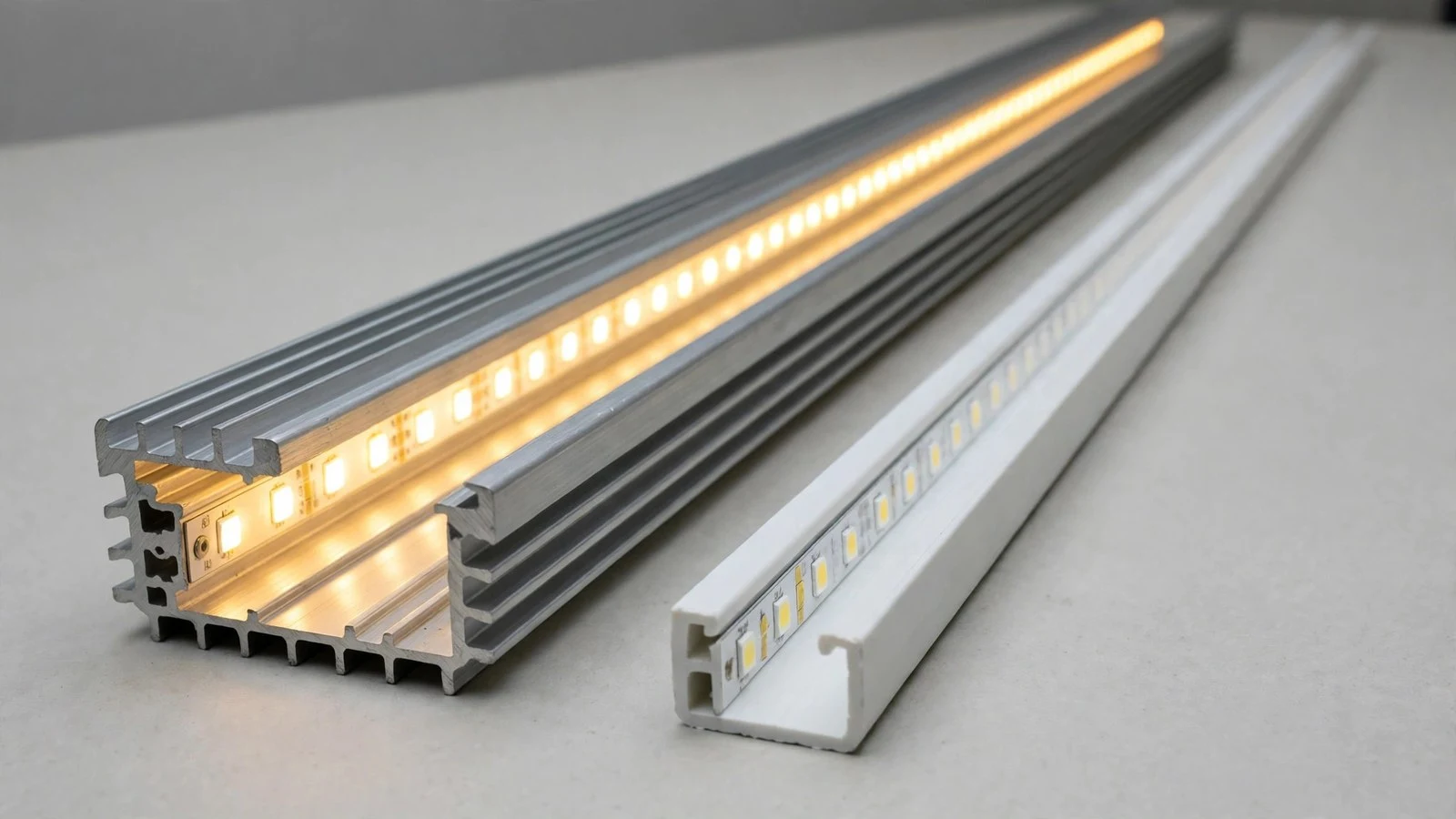
An aluminum LED channel is a metal housing that holds an LED strip, spreads its heat, and shapes its light. A plastic LED channel does the same job, but it is made from rigid PVC, not metal. That one material change decides how hot the strip runs, how straight the line stays, and how long the install looks good. For most permanent installs, aluminum is the safer pick, while plastic suits short-term or low-budget jobs.
In this guide, plastic means a rigid PVC channel, the hard U-shaped slot sold for LED strips. It does not mean a silicone channel, which is a third material, flexible and built for waterproof runs. Silicone has its own strengths, but this guide does not count them as plastic strengths. PC and PMMA appear here only as diffuser materials, the covers that soften the light.
What counts as a plastic LED channel
A rigid PVC channel is an extruded plastic slot with a snap-on or slide-in cover. It holds the strip, hides the wiring, and gives a clean edge where the strip meets the wall or shelf. The cover is usually PC or PMMA, the same diffuser plastics used on aluminum profiles. So the plastic in the channel body and the plastic in the cover are two different jobs.
A silicone channel is a different product, soft, bendable, and sealed against water. It suits curves and wet runs, but it is not the rigid PVC channel this guide compares. If your run curves around a bend, our bendable LED profiles for curved ceilings offer a metal option that follows the shape. Keep the three materials apart when you compare prices, because each one solves a different problem.
Check the product page before you buy, because some sellers call any non-metal channel plastic. Ask for the material name in writing, and look for the word PVC if you want a rigid slot. If the listing says silicone, flexible, or waterproof as its main feature, it is not the rigid PVC channel in this guide.
Aluminum vs plastic LED channels at a glance
The table below puts the two materials side by side, so you can see where each one wins. No material wins every row, and the right choice depends on the job in front of you. Start with the rows that match your project.
| Feature | Aluminum | Plastic (rigid PVC) |
|---|---|---|
| Heat dissipation | Conducts heat away from the strip | Traps heat, so the strip runs hotter |
| Rigidity and straightness | Stays straight over long runs | May sag or bow over long spans |
| Weathering and yellowing | Anodized or coated finish resists sun damage | May yellow, turn brittle, and crack in sun |
| Waterproofing | Metal body, but joints still need sealing | Material resists water, but joints still need sealing |
| Weight and cutting | Heavier, needs a saw for clean cuts | Lighter, cuts easily with hand tools |
| Cost | Higher material and tooling cost | Lower material cost in most cases |
| Look and finish | Architectural metal look, RAL coating options | Plain plastic look, fewer finish options |
Read the table by row, not by column, because the best material changes with the project. Aluminum wins where heat, straightness, and sun exposure matter, while plastic wins where cost and easy cutting matter. The sections below explain each row, so you can judge the trade-off for your own install. Cost is the one row where plastic leads.
Heat: why aluminum cools the strip
An LED strip turns part of its power into heat, and that heat must leave the strip or the light fades early. Aluminum pulls heat away from the strip and spreads it along the channel, so the strip runs cooler. PVC does not conduct heat well, so heat stays near the strip and the strip runs hotter.
The gap grows on long, high-power runs, where the strip draws more power along its full length. Good contact between strip and channel matters too, because heat can only leave through the surface that touches. Our installation guide for LED strips in aluminum channels shows how to seat the strip flat against the metal for full contact. If the strip lifts off the base, even a good aluminum channel cannot cool it well.
Rigidity, weathering and water
A long straight run shows the difference in rigidity at once, because gravity pulls on every span. Aluminum holds a straight line over long runs, so coves and shelf lines stay clean. Rigid PVC can sag or bow over the same span, and the bend shows up as a wavy line of light. Short runs hide this gap, but runs over a meter or more make it easy to see.
Sunlight is the second test, because a channel near a window or outdoors faces it every day. Anodized or coated aluminum resists sun damage, while PVC can yellow, turn brittle, and crack with long exposure. Water is the third test, and neither material is waterproof on its own, so joints and ends still need sealing. For outdoor and wet-area work, our outdoor and wet-area LED profiles explain how a sealed aluminum install is put together.
Cost, weight and cutting
Plastic wins on price in most cases, because the material costs less and the tooling is simpler. That gap matters on large jobs, where hundreds of meters of channel add up fast. Aluminum costs more up front, but the buyer pays for heat control, straightness, and a longer-looking install. Weigh the saving against the cost of replacing a failed run, not against the channel price alone.
Weight and cutting are the other side of the same trade, because plastic is lighter and easier to cut. A hand saw or a sharp knife cuts PVC cleanly, so small jobs go faster on site. Aluminum needs a proper saw and a steady hand, and the cut edge needs a quick deburr. The extra effort is small on a fixed install, but it adds up on a job with many short cuts.
Which material fits which project
Choose aluminum for high-power, long runs, where heat is the main risk to the strip. A long run in a kitchen, a shop, or an office puts the strip on show, so straightness matters too. Aluminum handles both jobs at once, which is why it is the default for permanent installs.
Choose aluminum for outdoor and wet areas as well, because sun and water punish plastic first. A sealed aluminum profile with a proper cover keeps the strip dry and the line straight. Plastic can work outdoors only if it is shaded and sealed, and it still needs more checks over time.
Choose plastic for short-term or low-budget jobs, where the install will come down soon. A trade-show booth, a seasonal display, or a rented flat all fit this case. The low cost and easy cutting save time on site, and the shorter life of the install is not a problem. For a rental, plastic also leaves less to repair when the tenant moves out.
When the job sits between the two cases, pick the material that protects the strip, not the cheaper one. A strip hidden behind a pelmet can use plastic, but a strip on show in a shop deserves aluminum. If you are unsure, order a sample of each and test them in the real install first.
Questions to ask before you buy
Ask these questions before you order, because the wrong channel is hard to swap once it is fixed in place. A supplier who answers in writing is a better bet than one who only talks in general terms. Short questions get clear answers.
- Ask the supplier to confirm the channel material in writing: aluminum or rigid PVC.
- Ask for the strip power per meter, and check the channel can cool it.
- Ask how the channel is sealed for outdoor or wet-area use.
- Ask for the cover material, PC or PMMA, and how it clips on.
- Ask for a sample, and test it in the real install before you order in bulk.
- Confirm the driver and power supply separately, because the profile supplier does not provide them.
- Check the channel width against the strip width before you order.
Ordering LED aluminum profiles from NIUYUAN
NIUYUAN is a LED aluminum profile manufacturer founded in 2012, with 6 in-house extrusion lines and OEM/ODM support. The factory covers 31,706 m², profiles are made from 6063-T5 aluminum alloy, and the company holds ISO 9001, RoHS and CE certification. NIUYUAN makes aluminum profiles only, so plastic channels are not in its product line. Strips and drivers are sourced separately, and the profile supplier does not provide them.
The minimum order quantity is 1000 pieces, and it applies to aluminum profiles only. Lead time is 20–30 days from prepayment, and in-stock profiles ship in 3–7 days, while custom profiles take 25–30 days. New tooling takes about 7 days, standard samples take about 7 days, and samples are free with freight collect. For custom lengths or profiles, see our custom LED aluminum profiles page, and confirm the details on order.
Frequently asked questions
What is the main difference between aluminum and plastic LED channels?
The material is the main difference. Aluminum conducts heat away from the strip and holds a straight line, while rigid PVC traps heat and can sag over long spans. Aluminum suits permanent installs, and plastic suits short-term or low-budget jobs.
Do plastic LED channels overheat LED strips?
They can run hotter than aluminum, because PVC does not conduct heat well. On short, low-power runs the gap is small, but on long, high-power runs the extra heat can shorten the life of the strip. Choose aluminum when heat is the main concern.
Can plastic LED channels be used outdoors?
They can, but they need shade and sealing, and they still age faster in sun. PVC can yellow, turn brittle, and crack with long exposure. For outdoor work, a sealed aluminum profile is the safer choice.
Are silicone LED channels the same as plastic LED channels?
No. A silicone channel is a third material, soft and flexible, built for waterproof runs. A plastic channel in this guide means a rigid PVC slot. Do not count the strengths of silicone, such as flexibility and waterproofing, as strengths of rigid PVC.
Does NIUYUAN supply plastic LED channels?
No. NIUYUAN makes LED aluminum profiles, not plastic channels, LED strips, or drivers. Plastic channels appear in this guide only as a comparison option. For aluminum profiles, including custom lengths, confirm the details on order.

Share this guide
Tell us what you need
Send Your Project Requirements
Share your contact details and tell us which LED profiles you need.
Explore custom profile options