
LED Strip Lighting Ideas for the Bedroom
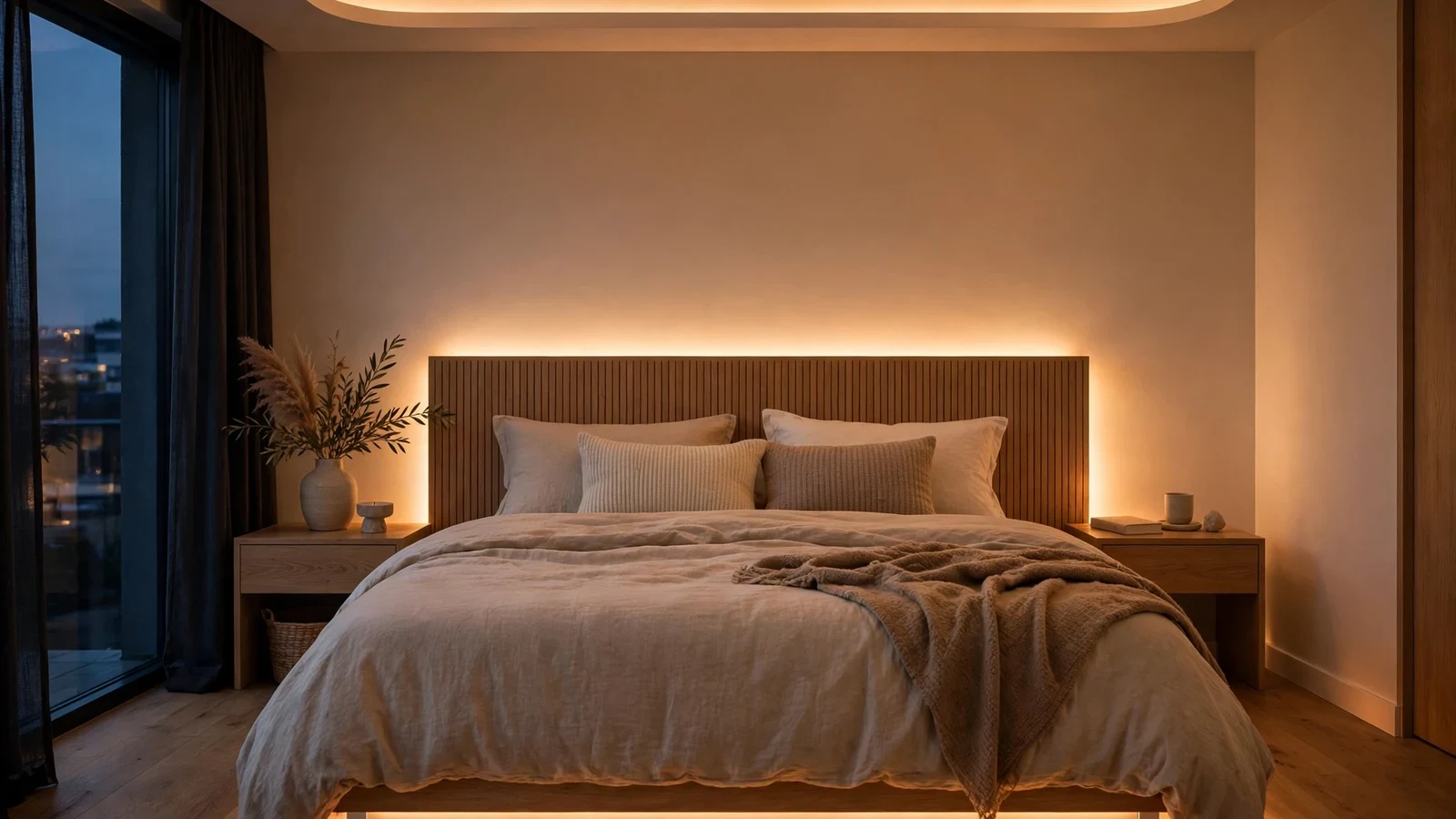
Hide LED strips in profiles for a calm bedroom glow. Four spots, diffuser and dimming tips, plus the questions to ask before you order.
On This Page
Bedroom LED strip lighting is indirect lighting that hides the strip inside a profile or a cove and bounces light off a wall or ceiling. Your eyes see a soft glow, not bare diodes. A bedroom needs calm light at night and clear light in the morning. Hidden strips can serve both moods with one install. This guide covers four spots, profile shapes, diffusers, dimming, and the questions to ask before you order.
Start with the room, not the product, and look at where you lie, read, dress, and walk at night. Each of those spots needs a different kind of light. A headboard glow helps you read, and a low bed glow helps you walk at night. A cove wash lifts the whole ceiling, and a wardrobe line helps you find clothes. One strip type cannot serve all four well, so the profile, the diffuser, and the dimmer must match the spot.
Why hidden light works in a bedroom
A bedroom is the one room where you often face light lying down. A bare strip at eye level shines straight into your eyes. A profile hides the strip and aims the light at a wall or a ceiling. The wall then acts as a large, soft reflector, so the glow feels calm with no bright line in view. This is the same bounce idea behind ambient lighting, and our ambient lighting guide explains how it works.
Warm light suits a bedroom better than cool white, and several guides suggest 2700–3000K with a colour rendering index of 80 or above. Some guides suggest 90 or above for a richer look, so treat these as guide suggestions, not as NIUYUAN test results. The aim is light that feels warm and shows skin tones and fabric colours in a natural way. Cool, harsh light before bed works against that aim.
The same bounce idea shapes living rooms too, and our indirect lighting guide shows how it scales to a larger space. In a bedroom the distances are shorter, so the effect is easier to control. A small cove can wash a whole ceiling, and a short run behind a headboard can fill the wall behind the bed. Bedrooms reward hidden light more than most rooms do, so start small, test at night, and add zones only where you need them.
Four places to put LED strips in a bedroom
Four spots cover most bedrooms, and the headboard gives reading light and a soft backdrop. The bed base gives a floating look and a safe path at night, while the cove or ceiling gives general light without a fixture. The wardrobe gives task light where you choose clothes, and each spot needs its own profile shape and diffuser. The table below sets out the four spots, so you can plan the whole room before you order.
| Spot | Profile shape | Diffuser | Dimming suggestion |
|---|---|---|---|
| Headboard back | Surface or corner profile behind the board | Opal | Its own dimmer for reading and sleep |
| Under the bed | Surface profile with a lip, set back from the edge | Opal | Low night circuit, gentle on the eyes |
| Cove and ceiling | Recessed or surface profile inside the cove | Opal or frosted | Main dimmer for the whole room |
| Wardrobe and shelves | Slim recessed profile inside the carcass | Frosted | Door switch or sensor, off when closed |
Read the table as a plan, not a shopping list, since you may not need all four zones. A small bedroom may need only a headboard glow and a cove wash, while a large bedroom may need all four. Add zones one at a time and test each at night. The cost of a zone is small next to the cost of a wrong one. A strip that glares from the bed is worse than no strip at all.
Match the profile shape to each spot
Profile shape follows the mounting surface, so a surface profile suits the back of a headboard, where the board hides the channel. A corner profile suits the angle where a headboard meets the wall, and a recessed profile suits a cove. A slim recessed profile suits wardrobe shelves, where space is tight, and the shape is not a style choice alone. It decides whether the strip stays hidden from the bed.
Inner width matters more than outer width, since the channel must fit your strip with a little room to spare. Ask the supplier for the inner width before you order, and check it against the strip width. A strip that is too wide will not sit flat. One that is too narrow may drift and show an uneven line. Measure twice, then order once. For wardrobe runs, our wardrobe profile guide covers shelf depth and door clearance.
Aluminium profiles also spread heat away from the strip, which helps it keep its colour and brightness over time. A plastic channel cannot do this as well, and for a bedroom this matters because the lights run every night. A profile that runs cooler is a profile that lasts longer. Choose the alloy and the finish for the room, not only for the price. A 6063-T5 aluminium profile is the standard material for this kind of install.
Pick a diffuser that hides the dots
The diffuser decides whether you see a smooth line or a row of dots. An opal diffuser hides the dots best, and it suits a bedroom where the light sits close to the eye. A frosted diffuser softens the light, but dots may still show at close range. A clear cover shows every diode and has no place in a bedroom. For cove lighting, our cove profile guide explains how diffuser choice changes the wash on the ceiling.
Depth helps as much as diffuser type, since a shallow channel with a frosted cover may still show dots. A deeper channel puts more space between strip and cover, so light blends before it leaves the profile. If you must use a shallow profile, choose opal and test it at night from the bed. Hold the profile at the planned height and check the line in the dark. What looks smooth in a shop may show dots in the dark.
Clean the diffuser before the final check, since dust and fingerprints scatter light and can create bright spots. Wipe the cover with a soft cloth and test again. If the line still shows dots, change the diffuser before you fix the profile in place. Moving a fixed profile costs far more time than swapping a cover. A ten-minute test saves an evening of rework.
Dimming for a bedroom that helps you sleep
Dimming turns one install into two moods, since full light suits dressing and cleaning. Low light suits reading and winding down, so each zone should dim on its own. The bed can stay dark while the wardrobe is lit, but a single dimmer for the whole room forces a compromise. Plan the zones on paper before you wire anything, and label each circuit as you go.
The dimmer must match the driver that powers the strip. NIUYUAN makes aluminium profiles only, so the strip, driver, and dimmer come from your lighting supplier. Ask that supplier which dimmer suits the driver you chose. A mismatched pair can flicker at low light, and flicker is the last thing you want at night. Check the pairing in writing before you buy, and test the lowest setting in a dark room.
Dimming methods vary, and the detail belongs in a companion guide on dimming for LED profiles. This guide keeps the rule simple: keep the light warm and low before bed. Avoid bright, cool light in the hour before sleep. Give the bed zone its own control within reach of the pillow. A small change in light level makes a large change in how the room feels at night.
A bedtime lighting checklist
Use this list on the first night after install, and walk through it with the room dark and each zone on its own. Fix what fails before you call the job done, since the list takes ten minutes and catches most errors.
- Warm light before bed, with no bare diodes visible from the pillow.
- Each zone dims on its own, so the bed can stay dark while the wardrobe is lit.
- The cove gives soft room light, and the headboard gives a reading glow.
- Wardrobe light turns off when the door closes.
- No strip shines straight into a mirror or a screen.
- Test every zone at night before the final fix.
What to ask before you order profiles
Order with a short list of questions, not a guess, and ask for the inner width and the strip width it fits. Ask which diffuser hides the dots at your mounting height, and ask for the lengths, the finish, and the cutting service. Ask how the profile fixes to the wall or shelf, since the answers decide whether the install looks built in or added on. A good supplier answers in writing, with drawings or samples to back the words.
NIUYUAN makes aluminium profiles from 6063-T5 alloy in a 31,706 m² factory with six in-house extrusion lines. The company holds ISO 9001, RoHS, and CE certification. It exports to North America, Europe, the Middle East, and Oceania. It has completed more than 36,000 projects around the world. Standard samples are free, with freight collect, and they ship in about seven days. New tooling takes about seven days.
Stock profiles ship in 3–7 days, and custom orders take 25–30 days from prepayment. The minimum order is 1,000 pieces, so plan the sample first, then the bulk order. A sample length lets you test the diffuser and the fit before you commit. Measure the headboard, the bed base, the cove, and the wardrobe, and order the lengths to match. A careful measure beats a fast order every time.
A bedroom rewards patience more than brightness. Hide the strip, bounce the light, dim it low, and test at night. The four spots in this guide cover most rooms, and the table above sets the plan. Start with the zone you use most, and add the rest once the first one feels right. Soft light, well placed, is the whole idea.
Frequently asked questions
Where should LED strips go in a bedroom?
Put them behind the headboard, under the bed, inside a cove, or inside the wardrobe. Hide the strip in a profile or a cove so the light bounces off a wall or ceiling. You should see a soft glow, not bare diodes.
What colour temperature is best for bedroom LED strips?
Several guides suggest 2700–3000K for bedrooms, with a colour rendering index of 80 or above. Warm light suits reading and winding down. Cool white light feels harsh before bed.
How do I hide the dots from LED strips in a bedroom?
Use an opal diffuser in a profile with enough depth. The cover blends the light before it leaves the channel. Test the profile at night from the bed before you fix it in place.
Can I dim bedroom LED strips?
Yes, if the dimmer matches the driver that powers the strip. Give each zone its own dimmer so the bed can stay dark while the wardrobe is lit. Ask your lighting supplier to confirm the pairing in writing.
What should I ask before ordering LED profiles for a bedroom?
Ask for the inner width and the strip width it fits, and ask which diffuser hides the dots at your mounting height. Ask for lengths, finish, and cutting service. Order a sample length first and test it at night.

Share this guide
Tell us what you need
Send Your Project Requirements
Share your contact details and tell us which LED profiles you need.
Explore custom profile options