
PC vs PMMA LED Diffusers: How to Choose the Right Cover for Your Project
Compare PC and PMMA LED diffusers by material grade, optical performance, profile fit and sample approval before placing a production order.
On This Page
Quick Answer
Choose an LED diffuser by its actual material grade, optical performance and compatibility with the aluminum profile. PC is often considered where handling toughness is important; PMMA is often considered for optical appearance and weathering performance. Neither material name guarantees a particular transmission level, service temperature or dot-free result. Approve the finished cover with the intended profile and LED strip before ordering production quantities.
Introduction
A diffuser can look like a minor accessory until it affects the whole lighting product. A cover that is difficult to fit slows assembly. A cover that looks smooth on a supplier’s sample may show individual LEDs with the buyer’s strip. An acceptable material can also become unsuitable when the installation temperature, cleaning routine or removal method changes.
For lighting brands, distributors and project buyers, the useful question is therefore more specific than “Is PC or PMMA better?” It is: “Which documented cover specification works in this particular assembly and service environment?”
This guide explains how to compare the two material families, separate material properties from finished-product performance, and prepare a sample approval that can support repeat orders. The inspection steps below are a proposed purchasing workflow. They should be adapted to the selected product and agreed with the supplier.
Start with the exact aluminum section and the intended product application. A material comparison becomes much more useful when the required fitting interface, visible appearance and operating conditions are already defined.
01. What Are PC and PMMA LED Diffusers?
Polycarbonate: PC
Polycarbonate is a thermoplastic available in many formulations. Buyers commonly investigate it when the component must tolerate handling, assembly loads or accidental impact.
However, “PC” does not identify an optical formulation, UV package or flame classification. A clear protective part, a scattering diffuser and a heat-resistant engineering component can all belong to the same broad material family while serving different purposes.
Acrylic: PMMA
PMMA stands for polymethyl methacrylate and is commonly called acrylic. Optical appearance, surface quality and weathering performance are frequent reasons to evaluate it for lighting covers.
Material modification matters here too. Standard acrylic, impact-modified acrylic and purpose-designed diffusing grades should not be treated as interchangeable products.
POLYVANTIS publishes comparisons showing different impact and stiffness characteristics for acrylic and polycarbonate sheets. Those comparisons provide useful material-family context, but they do not establish the performance of a thin extruded cover or its snap-fit edge. Review the proposed component separately. POLYVANTIS material comparison
02. Compare the Finished Cover, Not Just the Resin Name
Use the following questions to keep supplier proposals comparable.
| Purchasing priority | What to compare |
|---|---|
| Handling durability | Damage at fitting edges, cut ends and removal points |
| Optical appearance | Visible LED points, brightness, color appearance and surface finish |
| Temperature suitability | Grade documentation and behavior in the complete powered assembly |
| Exterior exposure | Evidence for the specified grade and exposure conditions |
| Maintenance | Removal method, approved cleaners and access requirements |
| Repeat supply | Controlled material, cover reference, geometry and sample identification |
A favorable material characteristic does not compensate for an unsuitable geometry. A tough cover with a poorly designed engagement edge may still be difficult to assemble. A visually attractive cover that cannot be removed after installation may create a maintenance problem.
Ask suppliers to quote the same scope: material identification, cover reference, lengths, quantities, appearance standard and packaging. Otherwise, a price difference may reflect a different formulation or supply condition rather than a more efficient source.
Avoid approving a substitution simply because both quotations use “opal PC” or “acrylic diffuser.” Those descriptions leave several important requirements unresolved.
03. Material, Surface Finish and Light Diffusion Are Different Decisions
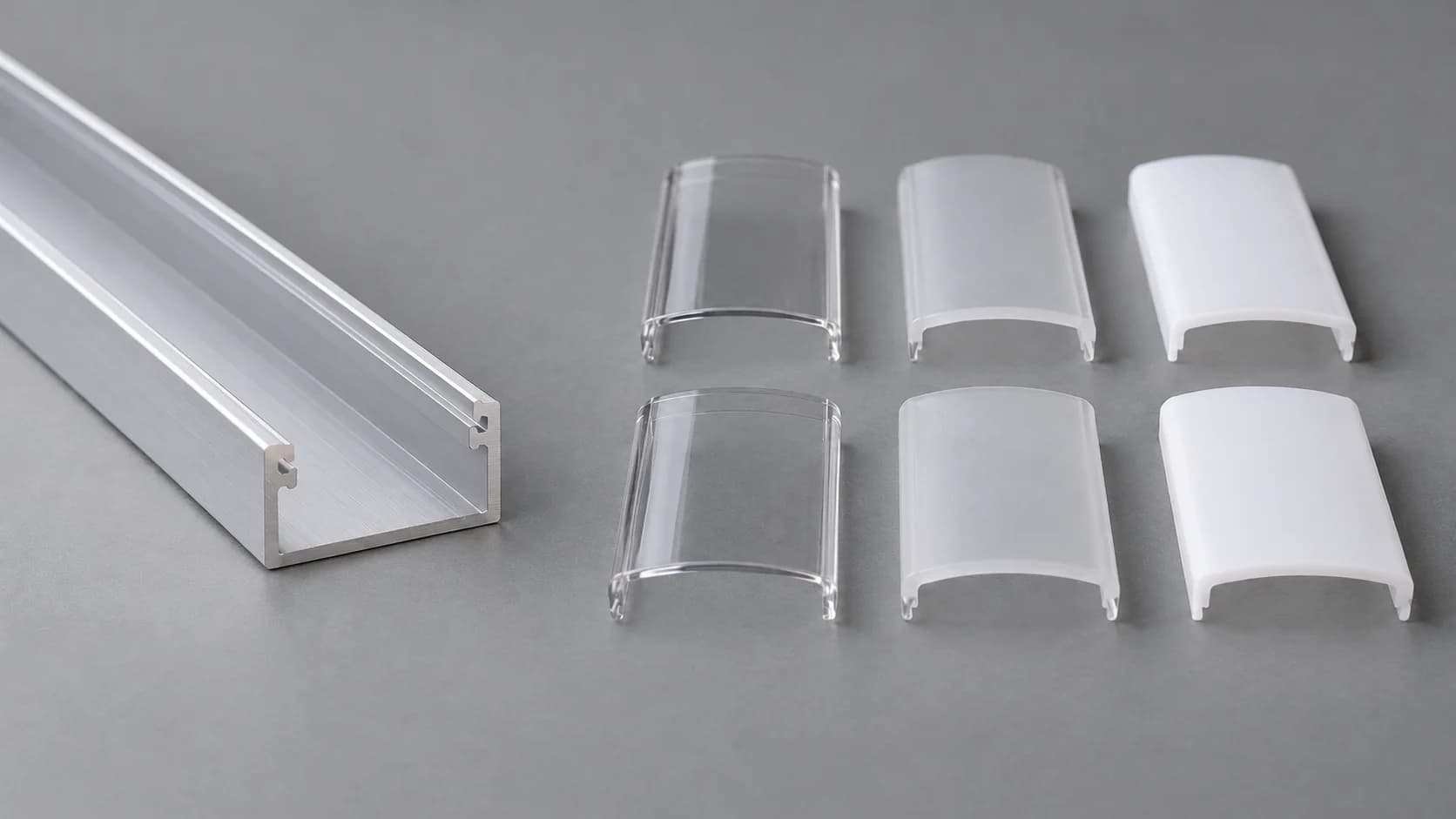
Clear, Frosted and Opal Describe Appearance
A clear cover, a textured surface and a milky-looking cover do not perform the same optical task. Appearance labels also vary between suppliers.
Ask what the proposed cover is intended to do: protect the strip, soften the appearance of emitters, spread light, conceal the unlit strip, or balance several of these requirements.
Materials suppliers offer specialized optical products for particular uses. PLEXIGLAS LED, for example, includes PMMA products developed for different lighting arrangements. Covestro also describes polycarbonate light-management films with different diffusion properties. These examples show why a generic polymer name is insufficient; they are not specifications for a NIUYUAN cover. PLEXIGLAS LED, Covestro light-management materials
Ask What a Transmission Figure Actually Measures
A percentage should come with its measurement conditions. Identify the tested material, thickness, finish and method.
Do not apply the transmission of a clear sheet directly to a colored or diffusing profile cover. Likewise, a material transmission value is not a measurement of the complete luminaire’s output or the illumination reaching a work surface.
For a practical comparison, assess candidate covers using the same strip, profile, electrical settings and viewing arrangement. If brightness is part of acceptance, agree whether the measurement concerns total light output, light distribution or illumination at a defined location.
These are different questions and may require different equipment.
For the optical side of the decision, see our guide to dotless LED strip lighting.
04. Will the Cover Fit the Aluminum Profile?
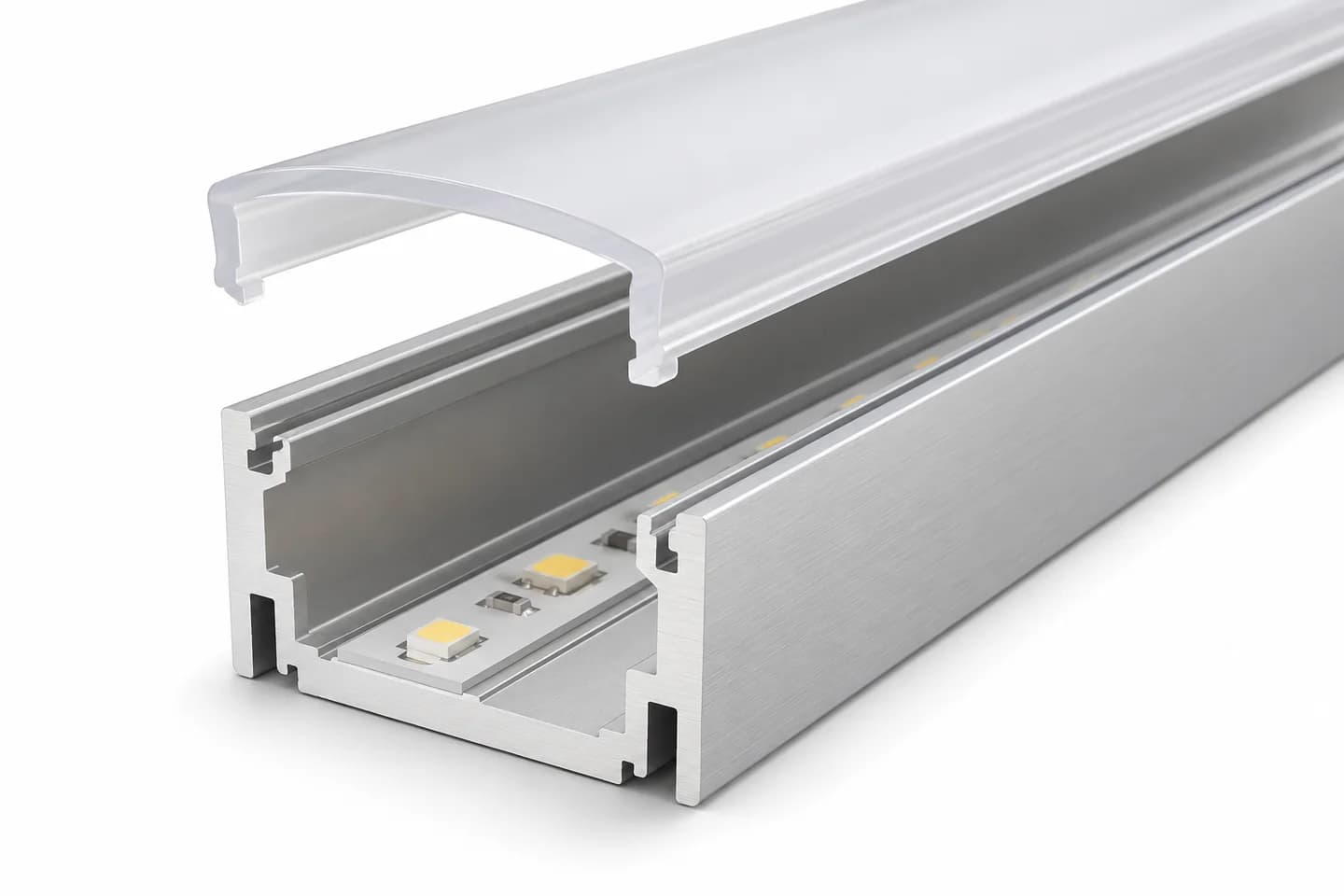
Check the Engagement Features
Start with a section drawing or an identified physical sample. External profile width alone does not define cover compatibility.
Review the features that locate and retain the cover:
- The mating edges and engagement geometry.
- The space available above the LED strip.
- The relationship between the cover and end caps.
- The intended fitting and removal method.
- The effect of connectors or cable exits near the ends.
A nominally similar cover may sit too high, disengage too easily or require excessive force. Do not solve a mismatch by forcing the component into place and treating that result as approval.
Include the Actual Supply Length
A short offcut is useful for checking an interface, but it cannot settle every question about a long finished cover.
Request a representative length when straightness, insertion method or end access affects installation. Ask the supplier to define any necessary allowance for length changes, end clearance and operating conditions.
Where a cover slides into a channel, installation preparation must include the required end access. Where it clips into place, the supplier should explain the intended engagement sequence.
NIUYUAN’s diffuser guidance specifically treats fitting geometry and cover options as model-specific. It also distinguishes appearance descriptions from material identification. NIUYUAN diffuser selection guidance
05. Translate the Service Environment into Customer Requirements
“Indoor use” is not a complete specification. A covered cabinet, an open shelf and a ceiling detail can expose the component to different operating and maintenance conditions.
Record the expected environment before comparing materials:
- Whether the cover is directly visible or concealed.
- Exposure to sunlight or other relevant sources of radiation.
- Expected surrounding temperature during operation.
- Contact with cleaning products.
- The likelihood of handling, impact or repeated removal.
- Moisture, dust and any project-specific enclosure requirements.
For temperature-related decisions, distinguish a published material property from an approved continuous operating condition for the finished assembly. Ask the supplier which documentation applies to the proposed grade and geometry.
For cleaning, provide the actual product or chemical specification where possible. A cleaner suitable for the aluminum section may require a separate compatibility check for the cover.
If the project specifies flame behavior, request evidence for the applicable material and conditions. UL explains that UL 94 concerns defined small-scale testing of plastic materials; a material rating should not be presented as blanket approval of the completed lighting product or its installation. UL guidance on UL 94 limitations
06. Use a Structured Sample Approval
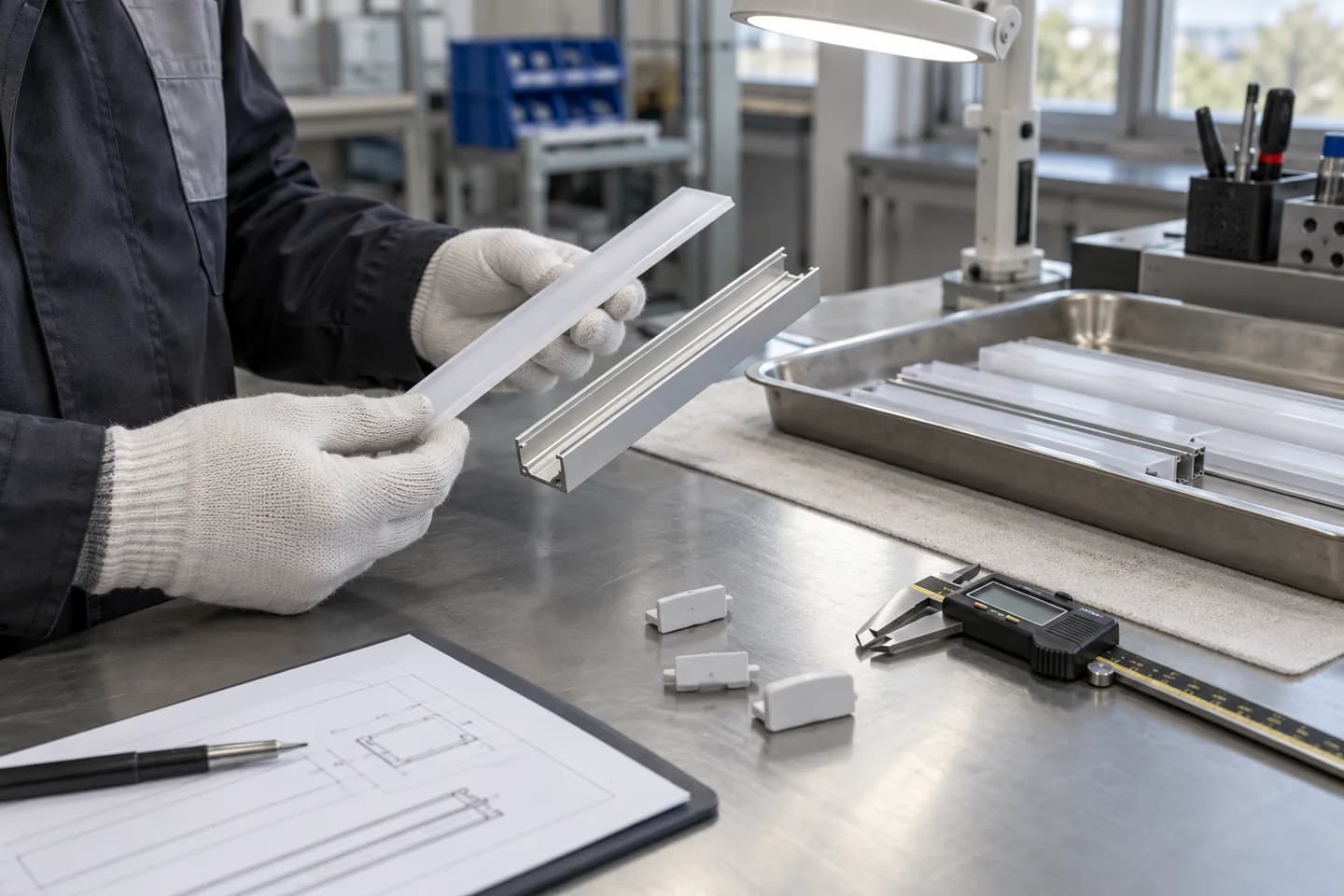
Step 1: Identify the Sample
Give each candidate a reference that connects the cover to its proposed material, profile and production revision.
Record the sample length, appearance, date received and any differences from the intended order. Keep the supplier’s description with the physical sample instead of relying on an email subject line.
Step 2: Inspect the Unlit Assembly
Check the cover for visible marks, contamination, deformation and inconsistent appearance. Fit it to the specified profile and examine the edges and ends.
Agree which surfaces are cosmetic. A hidden engagement feature and a directly visible face may require different acceptance criteria.
Step 3: Evaluate the Powered Sample
Use the intended LED strip and appropriate electrical equipment. Keep the profile, cover and viewing conditions consistent between candidates.
Evaluate the light line from the positions relevant to the installation. A close photograph taken directly above a bench sample may not represent a customer standing beside a display or looking across a reflective worktop.
Step 4: Review Handling and Maintenance
Follow the specified fitting method. If removal is part of the service plan, assess a representative removal and refitting sequence.
Define the number of cycles and acceptance conditions before testing when they are contract requirements. Do not invent a universal cycle count or assume that every supplier includes this evaluation.
Step 5: Record the Decision
Separate observations from approvals. “Sample received” is not the same as “approved for production.”
The record should identify the accepted combination, any remaining questions, and who can authorize changes. Retain the reference sample or a controlled equivalent for future comparison.
For factory testing, state the required checks explicitly. Mechanical fit inspection, optical comparison and environmental evaluation are separate activities.
07. Apply the Comparison to the Installation
Cabinet and Furniture Lighting
For a cabinet project, begin with viewing position and service access. The cover may be seen directly when a person sits nearby, even if the strip is concealed from a standing position.
Use a sample beneath the intended cabinet detail. Check the unlit appearance, reflected light and the ability to remove the cover without dismantling adjacent joinery.
Choose between candidate materials only after these requirements are clear.
Retail Displays
A display fixture may combine bright ambient lighting, frequent cleaning and close viewing. Write the cleaning and handling requirements into the brief.
Evaluate the illuminated product on the shelf as well as the light line itself. A cover that produces an attractive luminous surface may still deliver an unsuitable distribution for the merchandise.
Keep the approved cleaning instruction with the maintenance information supplied downstream.
Long Architectural Runs
A long run introduces joints, alignment and end conditions that a short sample can hide.
Review how covers are cut, joined, supported and replaced. Confirm whether a single uninterrupted piece is practical for manufacturing, transport and installation.
These are application decisions rather than reasons to declare one polymer universally superior.
08. Control Production, Shipment and Repeat Orders
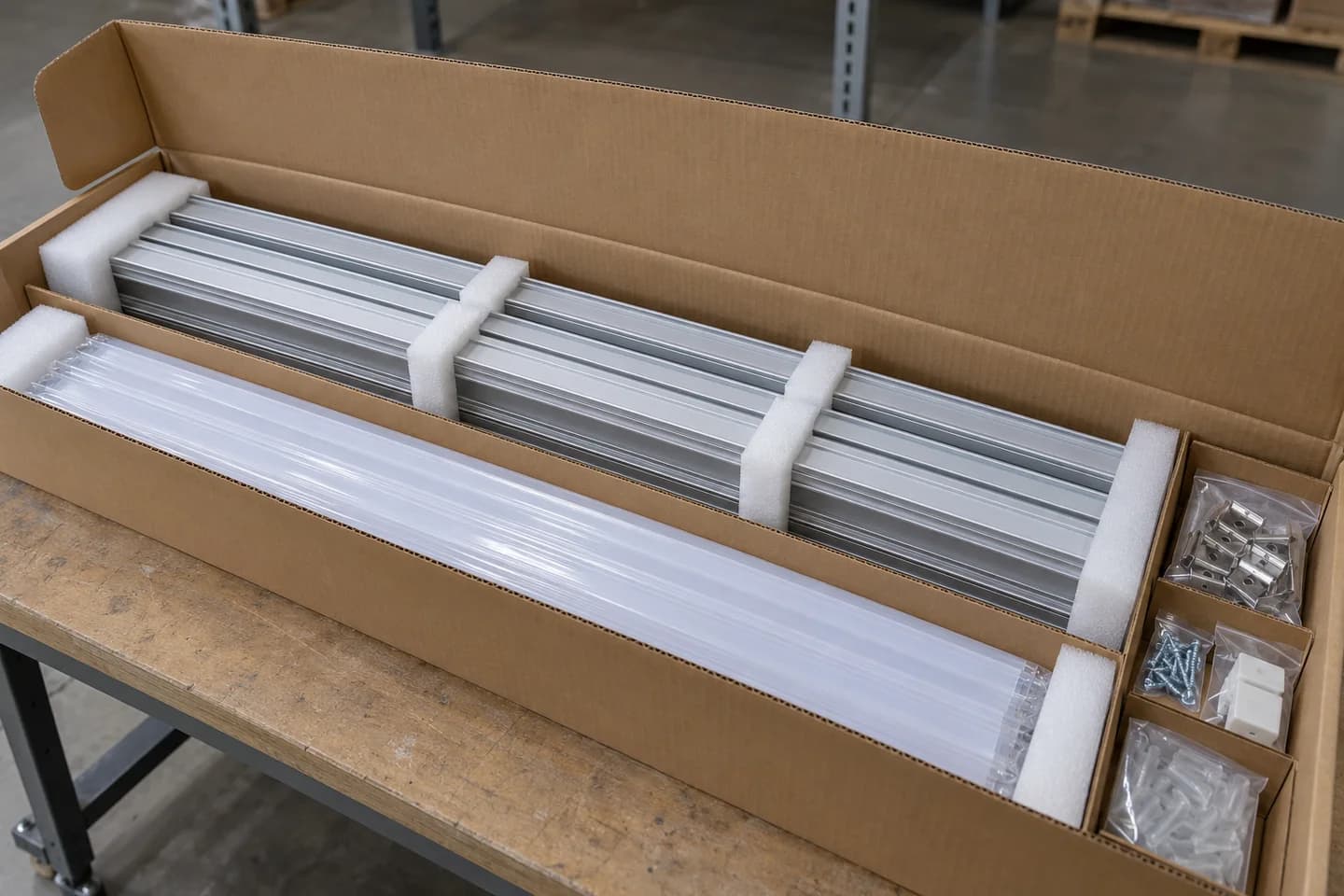
The approved sample needs to become an order specification. Include the aluminum model, cover reference, documented material requirement, finish, lengths and quantities.
If optical appearance is important, retain a reference and define the comparison conditions. An acceptance decision based only on a supplier’s photograph can be difficult to reproduce later.
For shipment inspection, check identity and condition against the agreed order. Confirm that similar-looking covers are separated and labeled, and that packages protect visible surfaces and fitting edges.
At receiving, review the package condition before opening, reconcile quantities and compare a defined sample of components with the approved reference. Record discrepancies by item and batch rather than describing an entire shipment as “different.”
Treat a proposed change of resin, color formulation, cover geometry or production method as a change to be reviewed. A repeat purchase should refer to a controlled specification, not simply “the same cover as before.”
09. What Should a Diffuser Inquiry Include?
A short inquiry can start the conversation, but a comparable quotation needs a clear technical brief.
Provide:
- Aluminum profile model or section drawing.
- Cover appearance and intended product application.
- Required material or the reason material advice is needed.
- LED strip reference and relevant dimensions.
- Supply lengths, quantities and destination.
- Important operating, cleaning or exposure conditions.
- Sample approval and inspection requirements.
If some information is unavailable, identify the open question. For example, “We have selected the aluminum section but need to compare two cover materials” is more useful than specifying an unverified resin grade.
Ask the quotation to identify exclusions and any development work. New cover geometry may require a separate tooling review from the aluminum extrusion.
FAQ
Is PC Always Better Than PMMA for LED Diffusers?
No. The better choice depends on the documented grade, fitting design, optical target and service environment. Use a material-family comparison to narrow the candidates, then approve the actual component and assembly.
Does PMMA Automatically Produce a Brighter Light Line?
No. The finished cover’s formulation, color, surface, thickness and geometry affect its optical behavior. Compare candidates under consistent conditions rather than using the polymer name as a brightness specification.
Will an Opal Cover Remove Every Visible LED Dot?
No. The cover works with the emitter arrangement and the distance between the LEDs and the cover. Assess the complete proposed assembly, including the intended viewing position, before approving a dot-free appearance.
Can I Replace a PC Cover with PMMA of the Same Width?
Not on width alone. Confirm the fitting interface, material behavior, length requirements and end-cap arrangement. Treat the substitution as a component change and obtain approval for the replacement.
Can a Material Datasheet Approve an Outdoor Lighting Assembly?
No. Material documentation answers questions about the material under stated conditions. The completed lighting assembly also requires appropriate evaluation of its construction, connections and intended environment.
What Is the Best Sample to Request?
Request an identified cover paired with the actual aluminum profile, at a useful length for the intended installation. Supply the LED strip information and define whether the sample is for mechanical fit, appearance, powered evaluation or several purposes.
Conclusion
PC versus PMMA is a starting point, not the final purchasing decision. A dependable specification connects the material grade to cover geometry, optical behavior, installation conditions and a repeatable approval process.
The most useful result is an accepted profile-and-cover combination that another colleague can identify, inspect and reorder without guessing.

Share this guide
Tell us what you need
Send Your Project Requirements
Share your contact details and tell us which LED profiles you need.
Explore custom profile options