
How to Choose Black LED Channels | NIUYUAN
Black LED channels hide in dark ceilings but cost brightness. Learn the two kinds of black, finishes, diffusers, and what to ask before you order.
On This Page
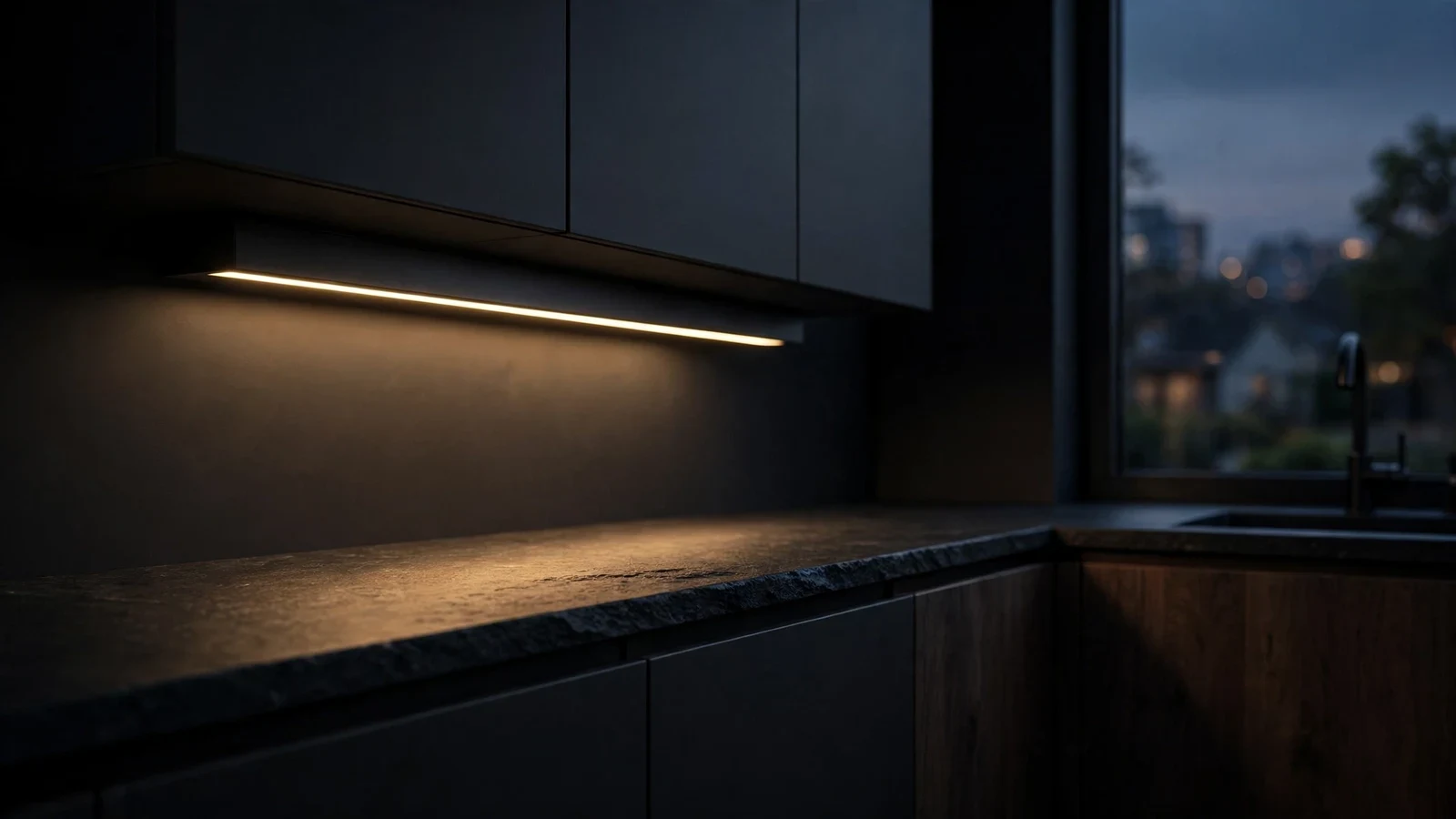
A black LED channel is either a black aluminum housing or a smoked diffuser that hides the strip when off. The housing is made by black anodizing or black paint, and it vanishes into a dark ceiling or cabinet. The diffuser glows softly when the light is on, and it hides the dots of the strip behind a dark cover. Many buyers mix the two up and then wonder why the room looks dim.
This guide separates the two kinds of black and compares finishes and diffusers side by side. It also shows where black works best and where silver stays the better pick for the room. Use it before you order, so the channel you buy matches the look you want and the light you need.
The Two Kinds of Black
A black housing and a smoked diffuser solve different problems, so start by naming which part is black. The housing is the aluminum body of the channel, and a black one blends into dark wood, dark paint, or a black ceiling. The diffuser is the plastic cover over the strip, and a smoked one looks almost black with the light off. With the light on, it glows softly and hides the dots of the strip behind its dark surface.
You can combine the two, but you do not have to. A black housing with a milky diffuser gives a dark line by day and even light at night. A silver housing with a smoked diffuser gives a bright frame that turns dark when lit. Ask your supplier which part is black before you compare prices. A quote for a black housing is not the same as a quote for a smoked cover.
Black vs Silver: When Black Wins
Silver is the safe default, since it reflects more light, suits pale ceilings, and matches most aluminum trim. Black is the better pick when the background is dark, as on a black ceiling or dark wood. On a black ceiling, a silver channel draws a bright stripe across the room and breaks the line of a dark shelf. Black avoids that clash, and it also suits bars, cinemas, and retail displays where the fitting should stay quiet.
| Black housing | Silver housing | |
|---|---|---|
| Off, on a dark surface | Nearly invisible | Bright stripe |
| Off, on a pale surface | Dark line stands out | Blends in |
| Light output | Lower, since dark walls absorb light | Higher, since pale walls reflect light |
| Best for | Dark ceilings, bars, cinemas, retail | Pale ceilings, kitchens, offices |
Match the housing to the surface it sits on, not to the strip inside it, since the surface sets the contrast. A dark surface calls for a black housing, while a pale surface calls for silver. When the surface is mid grey, ask for a sample and check it in place. A small sample answers in a minute what a long debate cannot, and it shows how the shade shifts under warm and cool light.
Three Diffuser Options: Clear, Milky, and Smoked
The diffuser shapes the light more than the housing does, so pick it by the job: brightness, even glow, or invisibility. A clear diffuser passes the most light, but it shows every dot of the strip. A milky diffuser spreads the light into one even line, yet it softens the output. A smoked diffuser hides the strip best when off, but it cuts the light the most, so you can only put one goal first.
| Diffuser | Light when on | Dots visible | Look when off | Best for |
|---|---|---|---|---|
| Clear | Brightest | Yes, dots show | Strip visible | Task light and work light |
| Milky | Soft and even | No, one even line | Pale line | Kitchens, offices, even glow |
| Smoked | Softest and dimmest | No, hidden | Dark line, nearly invisible | Bars, cinemas, dark ceilings |
Our full diffuser comparison covers clear, milky, and frosted covers in more depth, with notes on when each one suits a job. Read it before you lock in a diffuser choice, since the short version is simple. If you need brightness, start with clear or milky, and if you need the fitting to vanish, start with smoked and add more light.
One more check helps: look at the diffuser with the strip off and the room lights on. A milky diffuser reads pale grey in daylight, while a smoked diffuser reads near black. That daylight look is what you will live with most hours of the day.
Anodized Black vs Painted Black
A black finish can be anodized or painted, and the two age differently in daily use. Anodizing grows a hard oxide layer out of the aluminum itself, so it resists scratches and keeps its color. Paint, or powder coating, lays a film on the surface, and it can match any shade of black. That film can chip at the edges if the channel is cut or handled roughly, yet both can look the same on day one.
For daily wear, anodized black is the safer pick in busy rooms and retail displays. For an exact shade match, painted black gives you more choice. Our guide to anodized vs powder-coated finishes explains the trade-off in full, including how each finish holds up over time. Ask your supplier which finish the quote covers, since two quotes for black channels can hide two different finishes.
The Brightness Cost of Black
Black costs brightness, and you should plan for it before you order. Dark walls absorb light instead of bouncing it back into the room, and a smoked diffuser cuts the light further. The result is a fitting that looks superb and lights less than the same strip in a silver channel. Do not judge the strip by wattage alone, but judge the finished fitting, housing and diffuser together, in the room where it will live.
How much light is lost depends on the exact housing, diffuser, and strip, so no single number fits every black channel. Figures from different makers disagree, and a test on one fitting does not transfer to another. Read the spec sheet for the fitting you plan to buy. If the sheet gives no light data, ask for a sample and test it in place. A sample test beats any general figure.
Where Black Works Best
Black earns its place in rooms where the fitting should stay quiet, such as bars, cinemas, and restaurants with dark ceilings. Display cabinets with dark backs use black to keep the focus on the goods, not on the fitting. Home cinemas and media rooms use it for the same reason, and modern kitchens with black cabinets and black handles suit it too. Just make sure the worktop still gets enough light.
Black suits every mounting style, from surface mount to recessed to corner to suspended. A surface mount black channel reads as a dark line on the ceiling, while a recessed one hides its edges and leaves only light. A corner black channel tucks into dark cabinet corners without a bright edge. Pick the mounting style first and then the color, since no color can fix a channel mounted in the wrong place.
Black is the wrong pick in bright rooms that need all the light they can get, such as pale kitchens, offices, and workshops. A black channel over a white worktop draws the eye to the fitting, not to the work. In these rooms, silver stays the better choice, since it adds light instead of taking it away. Save black for rooms where mood matters more than maximum brightness.
Common Mistakes to Avoid
Most black channel problems come from small oversights, not bad products, so check this list before you order. Each item is easy to fix at the quote stage and costly to fix after the channels are cut.
- Ordering black without asking whether the housing or the diffuser is black
- Picking a smoked diffuser for a room that needs full brightness
- Judging the strip alone instead of the finished fitting
- Skipping a sample and finding the shade wrong after delivery
- Using black outdoors without asking about UV resistance for the diffuser
- Forgetting that drivers and power supplies are a separate purchase
Questions to Ask Before You Order
Five questions protect any black channel order. First, is the black anodized or painted, and which shade of black is it. Second, is the diffuser smoked or milky, and how does it look with the light off. Third, can you see a sample against your ceiling or cabinet before you commit. Fourth, what does the spec sheet say about light output for this exact fitting. Fifth, what are the order terms for your quantity.
When you order from NIUYUAN, the terms are simple and set before you commit. The minimum order is 1,000 pieces, and standard samples are free, with freight collect, arriving in about 7 days. Lead time runs 20–30 days from prepayment, and a new mould takes about 7 days. Channels use 6063-T5 aluminum alloy from 6 in-house extrusion lines. Our general guide to choosing LED aluminum channels covers the full range before you narrow it to black.
Stock channels ship in 3–7 days, while custom orders take 25–30 days. NIUYUAN holds ISO 9001, RoHS, and CE certification, and ships to North America, Europe, the Middle East, and Oceania. The factory covers 31,706 square metres, and NIUYUAN has completed more than 36,000 projects worldwide. For a first black channel order, a sample run answers the shade and brightness questions before you commit to 1,000 pieces.
Decide in Five Steps
Start with the surface, since a dark surface puts black in play and a pale one rules it out. Next, split the black into housing and diffuser, and choose each one on its own. Then check the brightness cost with a sample in the real room, not in a catalogue photo. After that, pick the finish: anodized for daily wear, and painted for an exact shade. Last, confirm the order terms and the sample before you pay.
Black channels reward buyers who test before they commit, since a sample on your own ceiling tells you more than any catalogue photo. When the fitting is right, install it with care, since a good channel deserves a clean mount. Our installation guide for LED strips in aluminum channels walks through the mounting steps. Order the sample, check it in place, and only then place the full order.
Frequently asked questions
What is a black LED channel?
A black LED channel is either a black aluminum housing or a smoked diffuser that hides the strip when off. The housing is made by black anodizing or black paint. The diffuser is a dark cover that glows softly when the light is on. Ask which part is black before you order.
Do black LED channels reduce brightness?
Yes. Dark walls absorb light instead of bouncing it back, and a smoked diffuser cuts the light further. How much light is lost depends on the exact housing, diffuser, and strip, so read the spec sheet for the fitting you plan to buy. If the sheet gives no light data, test a sample in place.
Is anodized black or painted black better?
Anodized black is the safer pick for daily wear, since the hard oxide layer resists scratches and keeps its color. Painted black, or powder coating, gives you more choice for an exact shade match, yet the film can chip at the edges. Ask your supplier which finish the quote covers.
Where do black LED channels work best?
Black works best where the fitting should stay quiet: dark ceilings in bars, cinemas, and restaurants, display cabinets with dark backs, and kitchens with black cabinets. It is the wrong pick for pale kitchens, offices, and workshops that need all the light they can get.
What should I ask before ordering black LED channels?
Ask whether the black is anodized or painted, whether the diffuser is smoked or milky, and whether you can see a sample first. Check the spec sheet for light output, and confirm the order terms. At NIUYUAN, the minimum order is 1,000 pieces, samples are free with freight collect, and lead time is 20–30 days from prepayment.

Share this guide
Tell us what you need
Send Your Project Requirements
Share your contact details and tell us which LED profiles you need.
Explore custom profile options